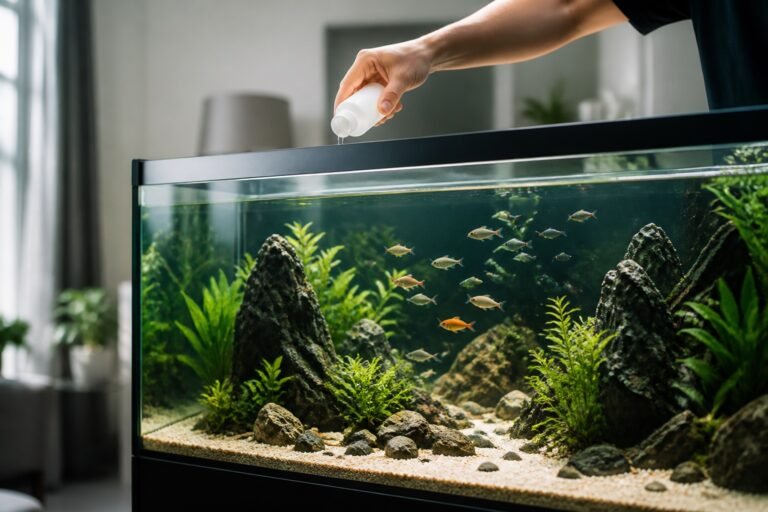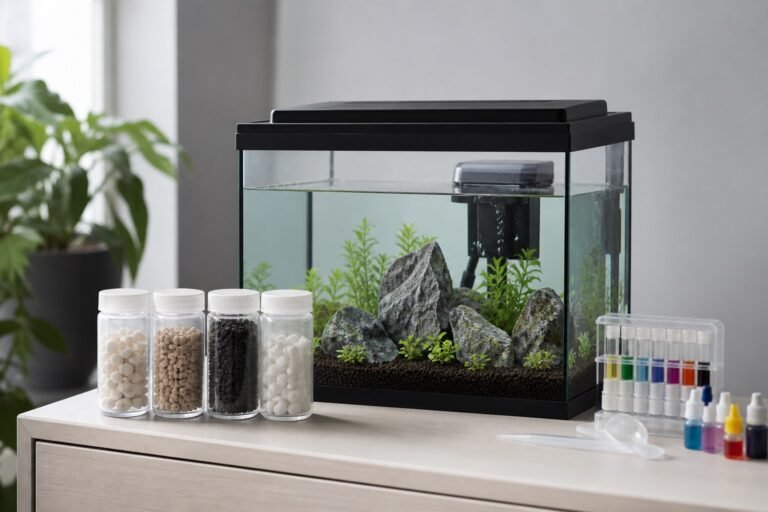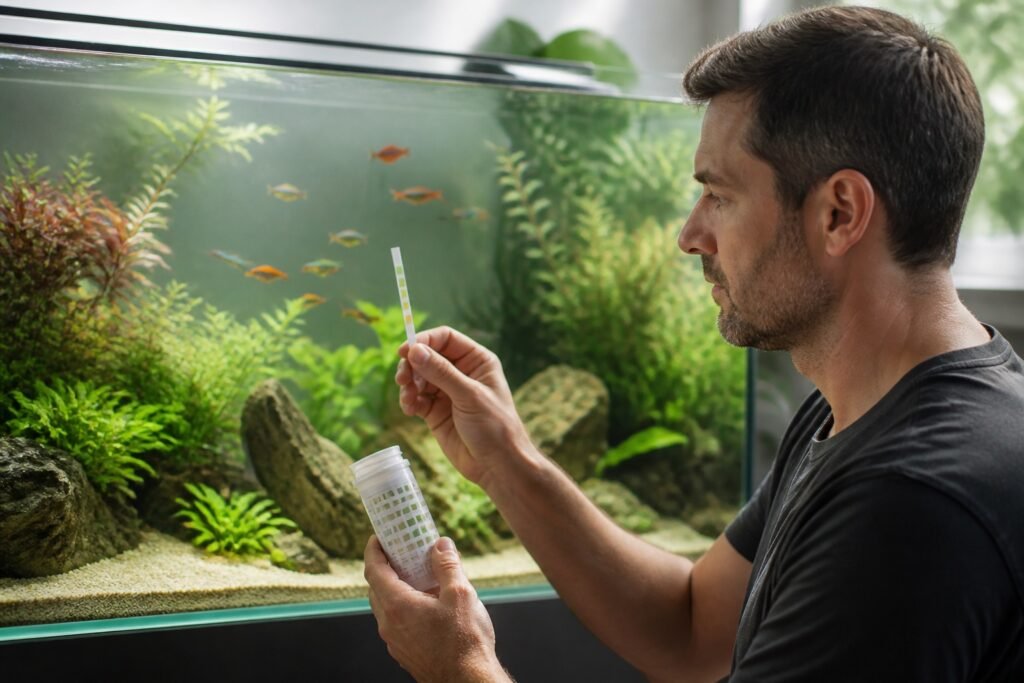
Ammonia (NH₃/NH₄⁺) should be at 0 in a cycled aquarium. Any positive reading burns gills: change partial conditioner and look for the cause (overload, filter, dead fish).
Measure, don't guess.If there are fish and NH₃/NO₂⁻conditioner · diseases · fish does not eat.
Aquarium hobby (fish/water only)
Reference:Merck — aquarium fish
Topic: "aquarium ammonia". Measure before medicating: ammonia, nitrite, nitrate, temperature and appearance of the fish.
- Biological load consistent with real liters and filtration.
- Regular partial water changes; Do not clean the filter with hot tap water.
- Related:nitrogen cycle.
Alarms
- Panting, stuck fins, die-off, high ammonia/nitrite.
Do not mix advice from walks, snacks or mammal heat.
Based on reference sources.Orientation by species, anchored to reference sources. It does not replace veterinary care.
Practical detail
- Measure ammonia/nitrite/nitrate and temperature before medicating.
- Partial water changes; Do not clean the filter material with hot tap water.
- Overpopulation and overnutrition are frequent causes of crises.
Frequently asked questions
Can I copy a tip from another species?
No. Do not blindly medicate or use mammalian advice for water.
Home medication
Do not use human drugs or viral tips.
Does this replace a veterinarian?
No.
Sources
- Merck — Aquarium fish www.merckvetmanual.com· consulted 2026-08-07
- OATA — Water quality (trade assoc.) ornamentalfish.org· consulted 2026-08-07