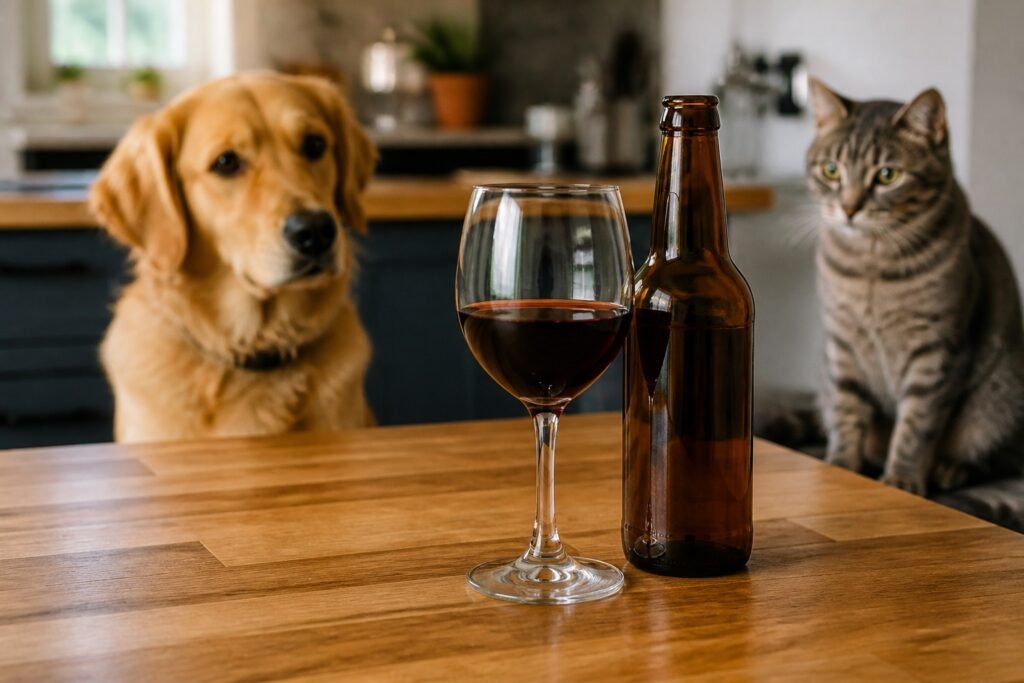
Alcohol is toxic to dogs, cats and other pets: beer, wine, spirits or sourdough can cause severe alcohol poisoning.
Ethanol depresses the central nervous system: vomiting, incoordination, hypothermia, acidosis, respiratory depression and coma. Sensitivity is high in small animals and cats.
We're not just talking about drinks: yeasted bread dough generates alcohol and gases in the stomach; “Drunk” desserts, sauces and syrups also count.
Urgency.If alcohol or sourdough was ingested: contact your veterinarian or toxicology. Do not induce vomiting without professional advice.
What to avoid at home
- Beer, wine, spirits and cocktailswithin reach.
- raw doughwith yeast.
- Foodcooked with alcohol that did not evaporate.
- "A sip for fun": It's not funny or safe.
Editorial criteria to decide
Before offering any human snack, answer three questions: does this species digest this format well? Is the quantity a premium or is it displacing the entire diet? Is there illness, extreme age or medication that changes the risk? If any answer is doubtful, do not improvise.
- Observe 24–48 hoursafter the first minimal test: feces, vomiting, itching, apathy or refusal of food.
- Count caloriesof the prizes within the daily total; The repeated “just a piece” makes you fat.
- Guarda toxics(chocolate, xylitol, grapes, alliums, alcohol, raw dough) out of curious snouts.
- In case of dangerous ingestion, contacta con veterinario o toxiclogía con peso estimado y cantidad/hora.
Remember that Faunexia's food sheets are multi-species editorial guidance: the verdict of the table and the dosage per species outweigh network anecdotes. When the risk is asymmetric (safe in one species and dangerous in another), don't generalize.
Preparation, storage and warning signs
Safety doesn't end at the plate: how you store leftovers, whether you leave cobs or bones in accessible trash, or whether you mix leftovers with onion/garlic determines much of the real urgencies. An "acceptable" food that is poorly presented (salt, sauces, sweeteners, fermentation) is no longer acceptable.
- Preparation:simple cooking where appropriate; without salt, butter, sofrito or sauces.
- Storage:garbage cover and countertops; dogs steal barbecues and buckets.
- Signs:repeated vomiting, bloody diarrhea, apathy, tremors, respiratory distress or absence of feces/urine depending on the species.
- Action:note estimated time and amount; Contact veterinarian/toxicology. Do not induce vomiting without indication.
- Prevention:Educate cohabitants and visitors: do not feed from the table without criteria.
If your animal is on a therapeutic diet (renal, hepatic, gastrointestinal, urinary), any new snack must go through the criteria of your veterinarian: what is "safe" in a healthy adult may be inappropriate in pathology.
Frequently asked questions
A teaspoon of beer
Don't recommend it; In small animals, little may be enough.
Does bread dough count?
Yes: fermentation endogenous alcohol dilation.
Drunk chocolate
Double risk: theobromine alcohol.
Hand sanitizer
También es toxic si se lame en cantidad.