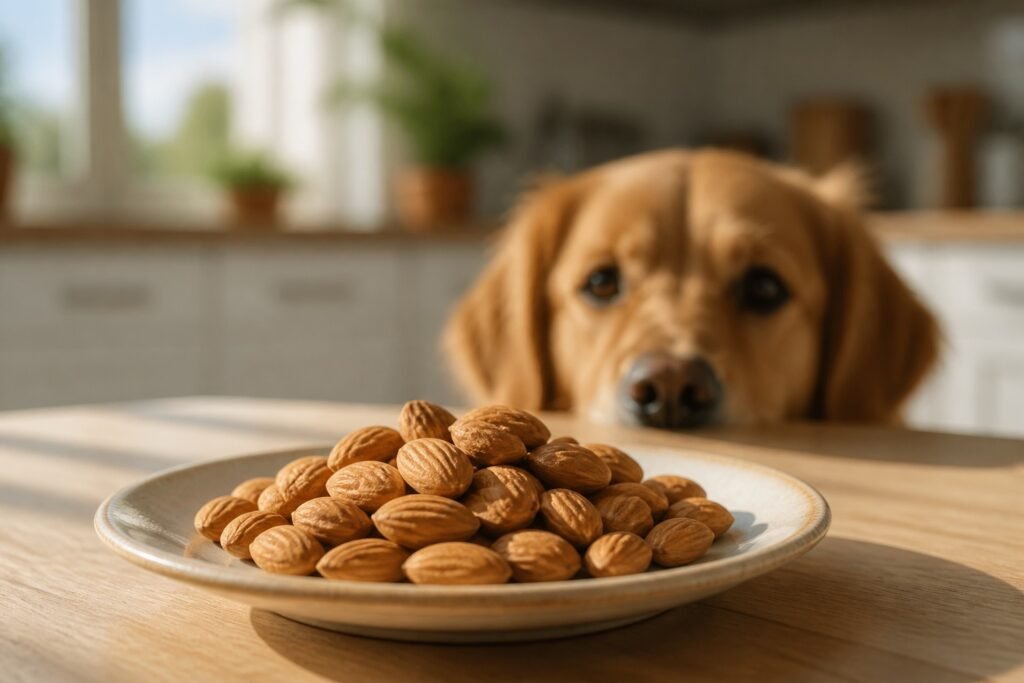
Almonds are not the classic toxin of macadamia, but they provide a lot of fat, risk of choking and digestive discomfort: in dogs it is better to avoid them as a snack; in cats and rabbits they do not make sense.
Unlike macadamia nuts, almonds are not typically listed as specifically toxic to dogs, but that doesn't make them "safe." They are high in calories, fatty and are often salted, toasted with spices or covered in chocolate/xylitol in snacks.
Whole can get stuck in the esophagus or intestine, especially in small dogs that swallow without chewing. Almond butter without xylitol is still a fat bomb: a little can be enough for gastric upset or crisis in animals with pancreatitis.
Some birds can eat unsalted almonds in moderation depending on the species; Even so, they do not replace a formulated diet. Rabbits should not be fed fatty nuts as a habit.
Fat and choking.If he ingested a handful of salted or chocolate almonds, contact your veterinarian. Monitor for vomiting, lethargy, or abdominal pain.
What to avoid
- Salted almonds, spiced or sugared toast.
- Snacks with chocolate, yogurt coating or sweeteners.
- Butterswithout reading the label (xylitol).
- Leave bowls of nutswithin reach at parties.
Editorial criteria to decide
Before offering any human snack, answer three questions: does this species digest this format well? Is the quantity a premium or is it displacing the entire diet? Is there illness, extreme age or medication that changes the risk? If any answer is doubtful, do not improvise.
- Observe 24–48 hoursafter the first minimal test: feces, vomiting, itching, apathy or refusal of food.
- Count caloriesof the prizes within the daily total; The repeated “just a piece” makes you fat.
- Guarda toxics(chocolate, xylitol, grapes, alliums, alcohol, raw dough) out of curious snouts.
- In case of dangerous ingestion, contact your veterinarian or toxicology with estimated weight and quantity/hour.
Remember that Faunexia's food sheets are multi-species editorial guidance: the verdict of the table and the dosage per species outweigh network anecdotes. When the risk is asymmetric (safe in one species and dangerous in another), don't generalize.
Preparation, storage and warning signs
Safety doesn't end at the plate: how you store leftovers, whether you leave cobs or bones in accessible trash, or whether you mix leftovers with onion/garlic determines much of the real urgencies. An "acceptable" food that is poorly presented (salt, sauces, sweeteners, fermentation) is no longer acceptable.
- Preparation:simple cooking where appropriate; without salt, butter, sofrito or sauces.
- Storage:garbage cover and countertops; dogs steal barbecues and buckets.
- Signs:repeated vomiting, bloody diarrhea, apathy, tremors, respiratory distress or absence of feces/urine depending on the species.
- Action:note estimated time and amount; Contact veterinarian/toxicology. Do not induce vomiting without indication.
- Prevention:Educate cohabitants and visitors: do not feed from the table without criteria.
If your animal is on a therapeutic diet (renal, hepatic, gastrointestinal, urinary), any new snack must go through the criteria of your veterinarian: what is "safe" in a healthy adult may be inappropriate in pathology.
Frequently asked questions
Does an almond hurt
A single one is rarely a catastrophe, but it brings no benefit. Habit and handfuls do worry.
Raw or toasted almonds
Neither is a recommended reward for dogs. If anything in poultry, without salt and in suitable pieces.
almond milk
It usually has additives and little value; do not use it as a regular drink. Water is the base.
Is it the same as macadamia
No: macadamia has specific toxicity in dogs. Almonds are more concerned about fat, salt and clogging.