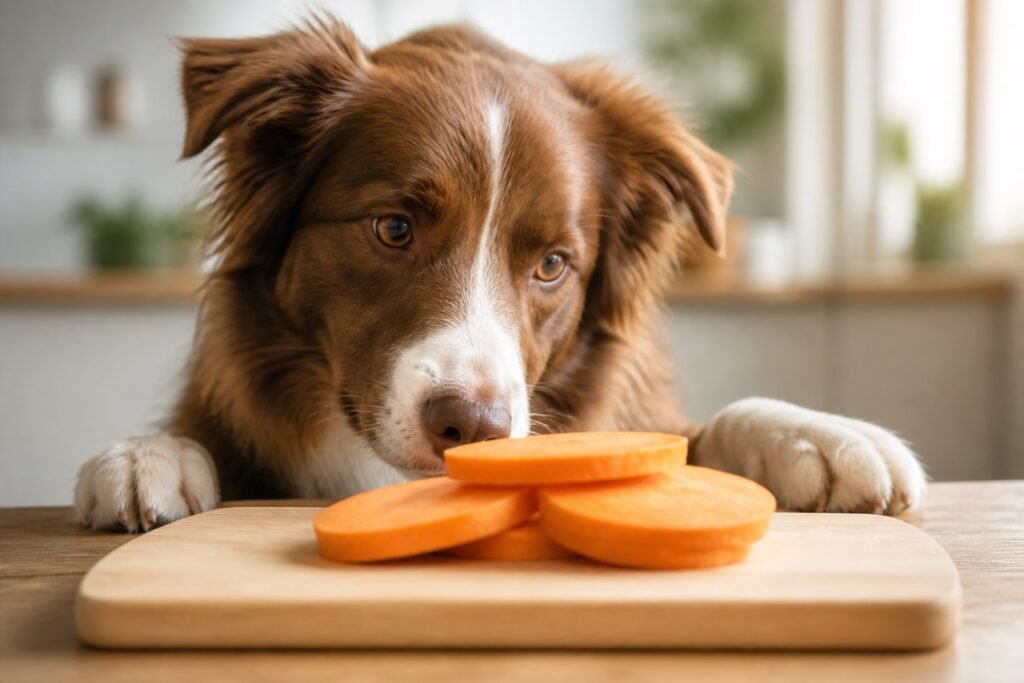
Cooked sweet potatoes without skin or seasonings are a common and reasonable snack for dogs; In cats it is not essential, and in rabbits starch requires minimum rations.
Cooked sweet potatoes provide digestible starch, fiber and beta-carotene. In healthy dogs it works as a chewy treat or occasional base for homemade sugar-free cookies. Raw it is more fibrous and less digestible; the skin may bother some.
Do not confuse sweet potato with raw or greenish potato: they are different plants. Still, avoid sweet potato fries, chips, sugary sweet potato marshmallows, or purees with butter and maple syrup.
Due to its glycemic load, do not abuse it in dogs with diabetes or obesity. In rabbits, starch is a rare reward, not a daily vegetable. In poultry, soft cooked pieces depending on species.
No fries or syrups.Spiced or fried "people's" sweet potatoes provide extra fat and salt. If there is previous pancreatitis, consult before starchy snacks.
How to offer it
- Boil or roastwithout oil or salt; cool and cut into sticks.
- Fur:It is better to remove it if your dog digests poorly or swallows without chewing.
- Homemade dehydrated:just sweet potato, no sugary jerky fonts.
- Guardleftovers in refrigerator 2–3 days; do not leave puree at room temperature.
Editorial criteria to decide
Before offering any human snack, answer three questions: does this species digest this format well? Is the quantity a premium or is it displacing the entire diet? Is there illness, extreme age or medication that changes the risk? If any answer is doubtful, do not improvise.
- Observe 24–48 hoursafter the first minimal test: feces, vomiting, itching, apathy or refusal of food.
- Count caloriesof the prizes within the daily total; The repeated “just a piece” makes you fat.
- Guarda toxics(chocolate, xylitol, grapes, alliums, alcohol, raw dough) out of curious snouts.
- In case of dangerous ingestion, contacta con veterinario o toxiclogía con peso estimado y cantidad/hora.
Remember that Faunexia's food sheets are multi-species editorial guidance: the verdict of the table and the dosage per species outweigh network anecdotes. When the risk is asymmetric (safe in one species and dangerous in another), don't generalize.
Preparation, storage and warning signs
Safety doesn't end at the plate: how you store leftovers, whether you leave cobs or bones in accessible trash, or whether you mix leftovers with onion/garlic determines much of the real urgencies. An "acceptable" food that is poorly presented (salt, sauces, sweeteners, fermentation) is no longer acceptable.
- Preparation:simple cooking where appropriate; without salt, butter, sofrito or sauces.
- Storage:garbage cover and countertops; dogs steal barbecues and buckets.
- Signs:repeated vomiting, bloody diarrhea, apathy, tremors, respiratory distress or absence of feces/urine depending on the species.
- Action:note estimated time and amount; Contact veterinarian/toxicology. Do not induce vomiting without indication.
- Prevention:Educate cohabitants and visitors: do not feed from the table without criteria.
If your animal is on a therapeutic diet (renal, hepatic, gastrointestinal, urinary), any new snack must go through the criteria of your veterinarian: what is "safe" in a healthy adult may be inappropriate in pathology.
Frequently asked questions
Sweet potato or sweet potato
In culinary practice they are often used as regional synonyms for sweet orange tubers. Choose plain cooked pulp, regardless of the name of the supermarket.
Is it useful for food allergies
Sometimes it enters exclusion diets under veterinary criteria, but do not improvise incomplete homemade diets without supervision.
Can I give it raw
Better cooked: it digests better and reduces the risk of choking on hard pieces.
How much sweet potato is too much
If it replaces more than a small percentage of the daily ration or softens stools, you are giving too much.