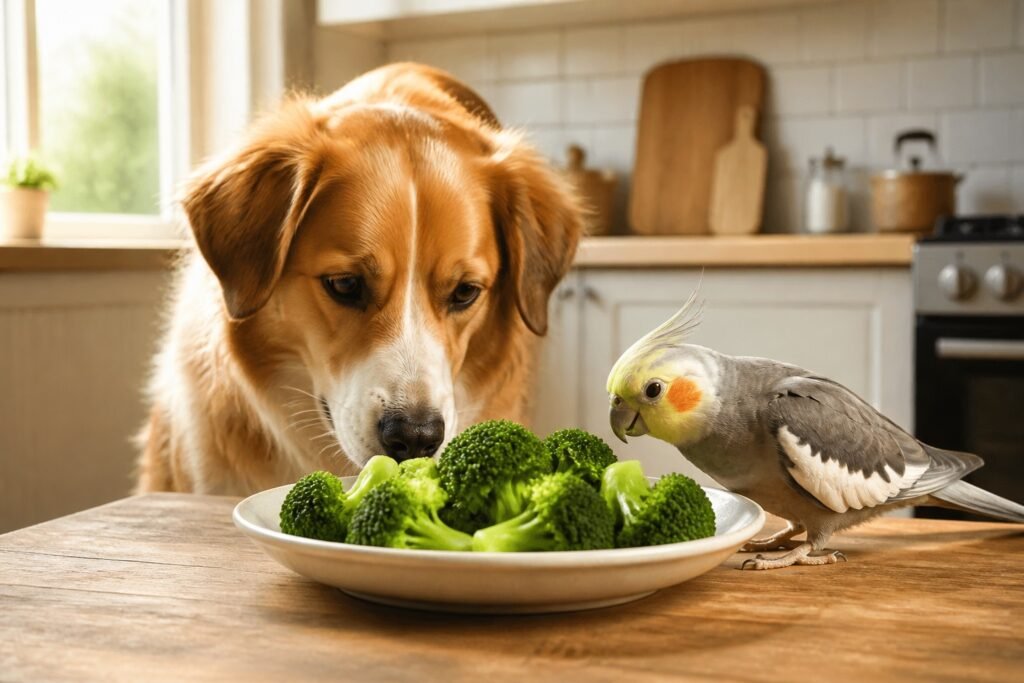
Small amounts of steamed broccoli are acceptable to many dogs; Excess raw food can irritate and, in large volumes, cruciferous vegetables generate gas. In birds it usually fits well.
Broccoli provides fiber, vitamin C and sulfur compounds. In dogs, the key is the dosage: a small cooked floret is a reasonable vegetable reward; A full plate can cause flatulence, gastric discomfort or, in theory and with enormous quantities, problems due to thiocyanate precursors—a rare scenario in real snacks.
Steaming softens the texture and digests better. Avoid fried broccoli, gratin with cheese or sautéed with garlic and onion (toxic alliaceae). The hard stems can be difficult for small dogs to chew.
Cats rarely need it. Rabbits can take it with slow introduction (gas). Many birds enjoy raw or steamed florets as enrichment.
Little quantity.Broccoli is not toxic like chocolate, but excess cruciferous vegetables cause swelling and discomfort. If there is vomiting or diarrhea after introducing it, discontinue.
How to offer it
- Lavawell and offers small florets; cut the thick stem.
- Brief steamwithout salt, oil or sauces.
- Ration:a foil or two in medium dogs; less in toy.
- Don't combinewith sautéed garlic, onion or plenty of butter.
Editorial criteria to decide
Before offering any human snack, answer three questions: does this species digest this format well? Is the quantity a premium or is it displacing the entire diet? Is there illness, extreme age or medication that changes the risk? If any answer is doubtful, do not improvise.
- Observe 24–48 hoursafter the first minimal test: feces, vomiting, itching, apathy or refusal of food.
- Count caloriesof the prizes within the daily total; The repeated “just a piece” makes you fat.
- Guarda toxics(chocolate, xylitol, grapes, alliums, alcohol, raw dough) out of curious snouts.
- In case of dangerous ingestion, contact your veterinarian or toxicology with estimated weight and quantity/hour.
Remember that Faunexia's food sheets are multi-species editorial guidance: the verdict of the table and the dosage per species outweigh network anecdotes. When the risk is asymmetric (safe in one species and dangerous in another), don't generalize.
Frequently asked questions
Raw or cooked
Both can be valid; Cooked food is usually better digested and reduces choking on hard pieces. In poultry, fresh raw food is common.
Does it include the stem
Only the tender part well chopped. The woody trunk does not contribute and is difficult to chew.
Can a puppy eat broccoli
In minimal quantities and well cooked, it is usually tolerated, but the growth diet must be complete; Do not substitute croquettes for vegetables.
What about cauliflower or cabbage?
Same family: useful in moderation, same risk of gas if you overdo it.