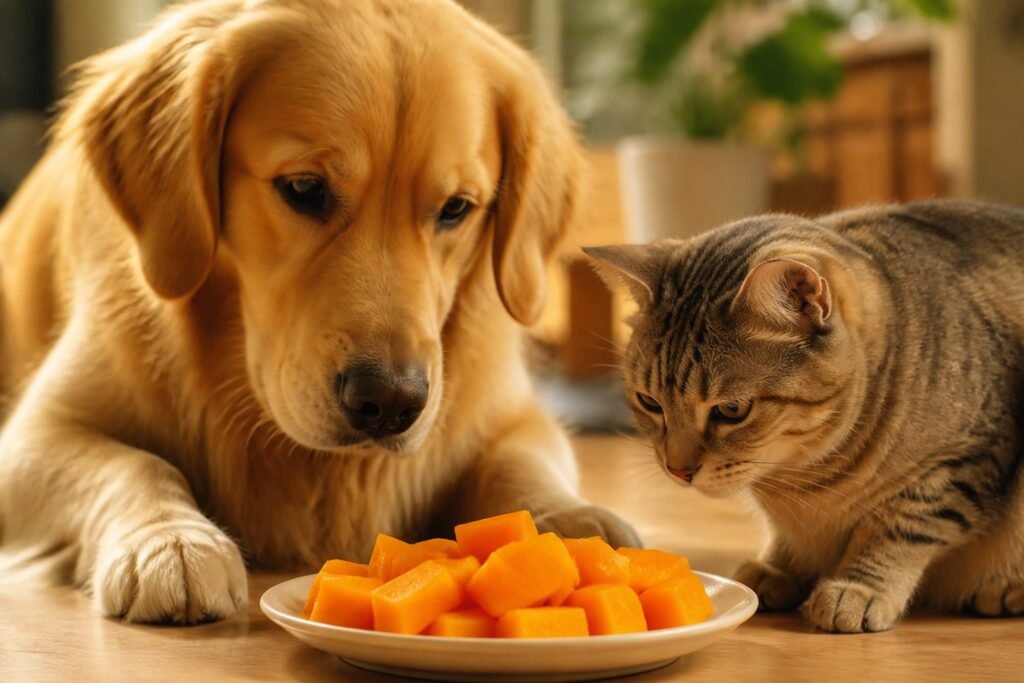
Cooked pumpkin without condiments is one of the most useful and safe vegetables as an occasional supplement in dogs and, in small quantities, in cats; it also fits sparingly in rabbits and birds.
Pumpkin pulp (peanut/Butternut type or similar) cooked provides soluble and insoluble fiber that, in appropriate doses, can help regulate loose stools or mild constipation in dogs - always as temporary support, not as a home diagnosis.
Offer only the pulp: no piles of seeds, no hard skin and no cake spices (sugar, nutmeg, sweeteners). Commercial 100% pumpkin puree (unsweetened) is practical; pumpkin pie filling is not.
In cats, the amount should be minimal: they are carnivorous and an excess of fiber can reduce protein intake. In rabbits, it is an occasional vegetable/fruit, not a substitute for hay.
It's not the filling of the cake.Avoid spicy pumpkin, sweet cans, and salty pumpkin seeds. If there is persistent vomiting, blood in stool or apathy, do not “treat” with pumpkin alone - go to the vet.
How to offer it
- Cook:steamed or baked, without oil, salt or spices; crushed or diced.
- 100% pureed:check that the only ingredient is pumpkin.
- Guidance ration in dogs:1–2 teaspoons per 5 kg of weight, depending on less.
- Seeds:do not offer them salty; raw ones in quantity do not provide a clear advantage at home.
Editorial criteria for deciding
Before offering any human snack, answer three questions: does this species digest this format well?, is the amount a reward or is it displacing the entire diet?, is there disease, extreme age or medication that changes the risk? If any answer is doubtful, don't improvise.
- Observe 24–48 hafter the first minimal test: stool, vomiting, itching, apathy or refusal of food.
- 17. Count caloriesof the prizes within the daily total; the repeated “just a chunk” gets fatter.
- Guarda toxics(chocolate, xylitol, grapes, alliums, alcohol, raw dough) out of curious snouts.
- Before dangerous ingestion, contact veterinarian or toxicology with estimated weight and amount/hour.
Remember that Faunexia's food files are multi-species editorial guidance: the verdict of the table and the dose per species weigh more than anecdotes of networks. When the risk is asymmetrical (safe in one species and dangerous in another), do not generalize.
Frequently asked questions
¿Sirve para la diarrhea?
Sometimes it helps to form stool by fiber, but first rules out serious causes (parasites, infection, foreign body). If there is lethargy or blood, consult now.
Raw pumpkin?
It is harder and less digestible. Cooked usually sits better. Very fine grating only if the animal tolerates it.
Pumpkin and zucchini are the same?
No, but both can be used cooked without seasoning. Zucchini is usually more watery and less “therapeutic fibrous” than winter squash.
Can I give it daily?
Better as a one-off resource or vegetable prize. The base must be the complete food of the species.