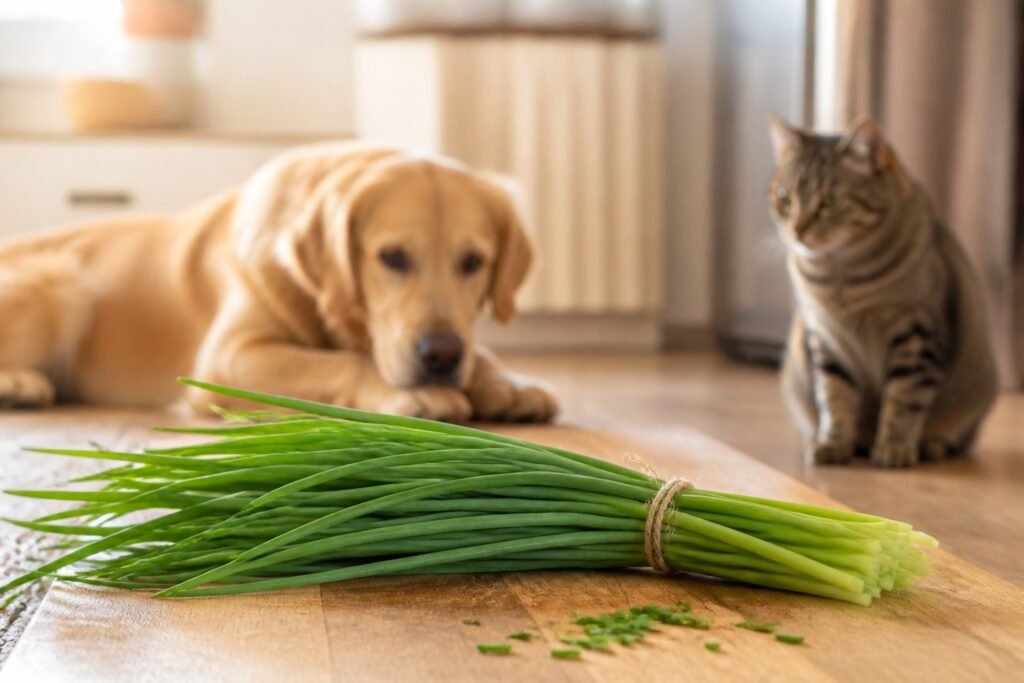
Yes: chives belong to the alliaceae (Allium) and can damage the red blood cells of dogs and cats, raw or cooked; Do not use it as a decoration on your food.
Chives, onions, garlic, leeks and shallots share organosulfur compounds that cause oxidative stress in erythrocytes. The result can be hemolytic anemia: weakness, dark urine, pale gums, vomiting, and rapid breathing.
The form does not matter as much as the dose and the weight of the animal: fresh, dried, powdered or in sauces count. Cats tend to be especially sensitive. A "touch" of chives in a tortilla or dip can be relevant if the animal eats the entire dish.
There is no “safe” homemade dose worth calculating in the kitchen. Prevention is simple: cook without alliaceae to share and do not leave boards with remains within reach.
Alliaceous toxicity.If chives or other Allium were ingested in an appreciable quantity, contact your veterinarian or toxicology. Signs of anemia may take days to appear; Don't trust yourself because "today is fine."
What to avoid
- fresh chivesin salads, dips, omelettes and compound butters.
- dried herbsand seasonings that include onion/chive powder.
- Leftoversof "lightly" flavored human food.
- Garden:prevents the dog from grazing in the Allium aromatic garden.
Editorial criteria to decide
Before offering any human snack, answer three questions: does this species digest this format well? Is the quantity a premium or is it displacing the entire diet? Is there illness, extreme age or medication that changes the risk? If any answer is doubtful, do not improvise.
- Observe 24–48 hoursafter the first minimal test: feces, vomiting, itching, apathy or refusal of food.
- Count caloriesof the prizes within the daily total; The repeated “just a piece” makes you fat.
- Guarda toxics(chocolate, xylitol, grapes, alliums, alcohol, raw dough) out of curious snouts.
- In case of dangerous ingestion, contact your veterinarian or toxicology with estimated weight and quantity/hour.
Remember that Faunexia's food sheets are multi-species editorial guidance: the verdict of the table and the dosage per species outweigh network anecdotes. When the risk is asymmetric (safe in one species and dangerous in another), don't generalize.
Frequently asked questions
Is it less toxic than onion
It's still Allium. Don't use it as an excuse to give "just a little." The power varies, the practical recommendation is zero.
And the garnish chives that he removed from the plate
If it was a minimal piece and the dog is large, the risk may be low, but write down the amount and ask if there is any doubt or if it is a small animal.
Do symptoms appear immediately?
Sometimes there is vomiting soon; anemia may take 1–5 days. That's why early assessment matters.
Is garlic in "natural" capsules worth
Don't improvise garlic supplements. They can concentrate the same problem.