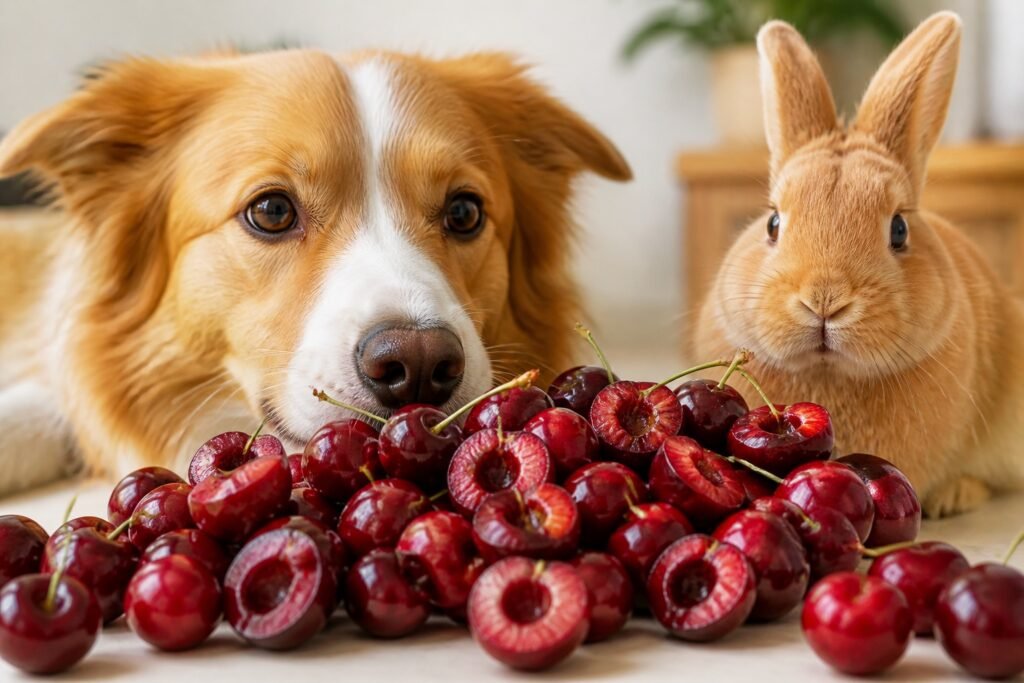
Pitted cherry flesh may be an occasional treat, but pits, leaves and stems contain potential cyanide and the pit adds clogging risk; In practice, many tutors prefer to avoid them.
Ripe, well-pitted pulp is not the star poison on classic lists, but the margin of error is narrow: a small bone is easy to swallow. Additionally, Prunus leaves and stems can release cyanogenic glycosides if chewed in quantity.
Cherries in syrup, jams and cakes add sugar; cherry raisins are not a substitute for keeping an eye on the stone. In dogs with sensitive pancreas, excess sweet fruit does not help either.
If you offer, pit one by one and give only pulp. If your dog usually swallows whole, choose another problematic seedless fruit (such as washed blueberries) or seedless apple.
Bone and green parts.Do not offer pitted cherries. If he swallowed several bones or parts of the plant, contact the veterinarian.
How to offer it
- Bonecompletely; remove stems.
- Lavaand cut the pulp in half.
- Amount:one or two pitted cherries in medium dogs.
- Don't usecocktail cherries with colorings or syrup.
Editorial criteria to decide
Before offering any human snack, answer three questions: does this species digest this format well? Is the quantity a premium or is it displacing the entire diet? Is there illness, extreme age or medication that changes the risk? If any answer is doubtful, do not improvise.
- Observe 24–48 hoursafter the first minimal test: feces, vomiting, itching, apathy or refusal of food.
- Count caloriesof the prizes within the daily total; The repeated “just a piece” makes you fat.
- Guarda toxics(chocolate, xylitol, grapes, alliums, alcohol, raw dough) out of curious snouts.
- In case of dangerous ingestion, contact your veterinarian or toxicology with estimated weight and quantity/hour.
Remember that Faunexia's food sheets are multi-species editorial guidance: the verdict of the table and the dosage per species outweigh network anecdotes. When the risk is asymmetric (safe in one species and dangerous in another), don't generalize.
Preparation, storage and warning signs
Safety doesn't end at the plate: how you store leftovers, whether you leave cobs or bones in accessible trash, or whether you mix leftovers with onion/garlic determines much of the real urgencies. An "acceptable" food that is poorly presented (salt, sauces, sweeteners, fermentation) is no longer acceptable.
- Preparation:simple cooking where appropriate; without salt, butter, sofrito or sauces.
- Storage:garbage cover and countertops; dogs steal barbecues and buckets.
- Signs:repeated vomiting, bloody diarrhea, apathy, tremors, respiratory distress or absence of feces/urine depending on the species.
- Action:note estimated time and amount; Contact veterinarian/toxicology. Do not induce vomiting without indication.
- Prevention:Educate cohabitants and visitors: do not feed from the table without criteria.
If your animal is on a therapeutic diet (renal, hepatic, gastrointestinal, urinary), any new snack must go through the criteria of your veterinarian: what is "safe" in a healthy adult may be inappropriate in pathology.
Frequently asked questions
Is cherry pit cyanide safe if not chewed?
The chemical risk increases if it is chewed/broken; the physical risk of obstruction exists equally. Don't play that distinction at home.
Sour or sweet cherries
Both require boning. The acidity can bother sensitive stomachs.
Picotas and cherries
Same logic as Prunus: pitted pulp or better another fruit.
My dog ate cherries off the ground in the garden.
Estimate how many and if there were bones. If there is an unknown quantity, call and describe signs (vomiting, respiratory distress, apathy).