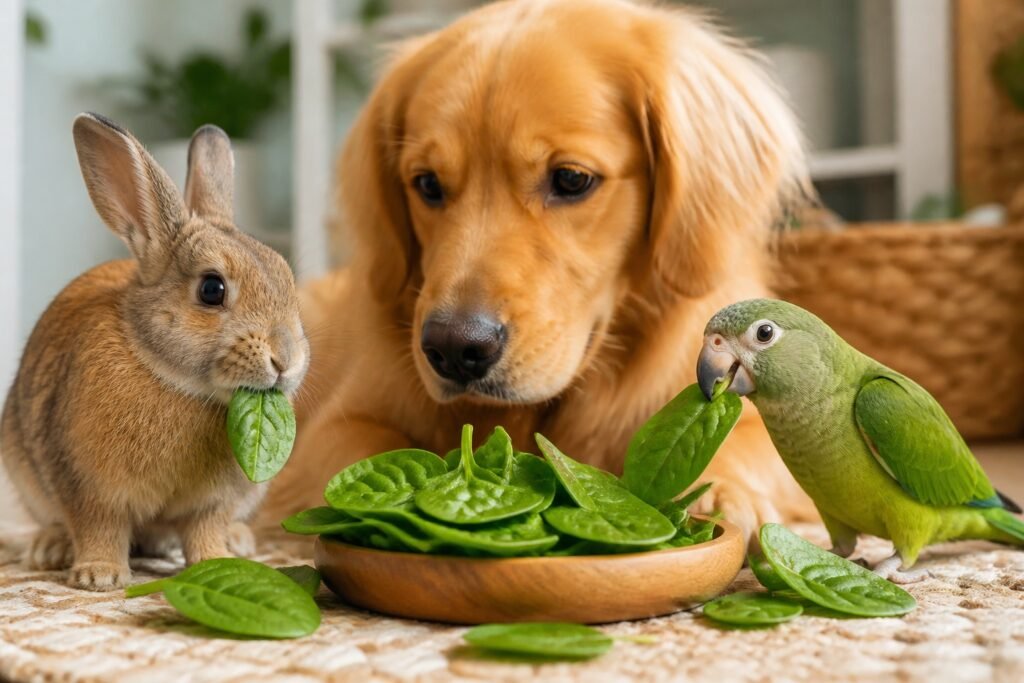
Spinach in small quantities can be offered to several species, but oxalates limit the portion: do not make it the only daily vegetable, especially if there is a urinary history.
Spinach provides vitamins and fiber, and also oxalic acid, which binds to calcium. In healthy animals, an occasional chunk is usually irrelevant; The problem appears with large and repeated portions or in patients predisposed to calcium oxalate stones.
Cooked or well washed raw it works as a vegetable reward for dogs. In cats, minimal. In rabbits and birds, rotate with other leaves (romaza, lamb's lettuce, arugula, etc.) so as not to depend on a single source of oxalates.
Avoid creamed spinach with cream, salt, garlic or onion. Canned foods can contain high sodium.
Oxalates: limited portion.If your pet has a history of urinary stones, ask your veterinarian before giving spinach or other leaves high in oxalates.
How to offer it
- LavaGood for removing dirt and debris.
- OffersChopped young leaves or sauté minimally without seasoning (steamed better).
- Rattanwith romaine lettuce, pumpkin, carrot, etc.
- Amount:a small handful on medium dogs, not a bowl.
Editorial criteria to decide
Before offering any human snack, answer three questions: does this species digest this format well? Is the quantity a premium or is it displacing the entire diet? Is there illness, extreme age or medication that changes the risk? If any answer is doubtful, do not improvise.
- Observe 24–48 hoursafter the first minimal test: feces, vomiting, itching, apathy or refusal of food.
- Count caloriesof the prizes within the daily total; The repeated “just a piece” makes you fat.
- Guarda toxics(chocolate, xylitol, grapes, alliums, alcohol, raw dough) out of curious snouts.
- In case of dangerous ingestion, contacta con veterinario o toxiclogía con peso estimado y cantidad/hora.
Remember that Faunexia's food sheets are multi-species editorial guidance: the verdict of the table and the dosage per species outweigh network anecdotes. When the risk is asymmetric (safe in one species and dangerous in another), don't generalize.
Preparation, storage and warning signs
Safety doesn't end at the plate: how you store leftovers, whether you leave cobs or bones in accessible trash, or whether you mix leftovers with onion/garlic determines much of the real urgencies. An "acceptable" food that is poorly presented (salt, sauces, sweeteners, fermentation) is no longer acceptable.
- Preparation:simple cooking where appropriate; without salt, butter, sofrito or sauces.
- Storage:garbage cover and countertops; dogs steal barbecues and buckets.
- Signs:repeated vomiting, bloody diarrhea, apathy, tremors, respiratory distress or absence of feces/urine depending on the species.
- Action:note estimated time and amount; Contact veterinarian/toxicology. Do not induce vomiting without indication.
- Prevention:Educate cohabitants and visitors: do not feed from the table without criteria.
If your animal is on a therapeutic diet (renal, hepatic, gastrointestinal, urinary), any new snack must go through the criteria of your veterinarian: what is "safe" in a healthy adult may be inappropriate in pathology.
Frequently asked questions
Raw or cooked
Both are worth it. Cooked it reduces volume and can be digested more easily; do not add salt.
Is baby spinach better
It still has oxalates. The advantage is softer texture, not carte blanche for large portions.
Can a rabbit eat spinach daily
Better not as the only daily sheet. Diversify greens and keep hay at will.
Is frozen okay?
Yes if it's just spinach, cooked without salt. Drain excess water.