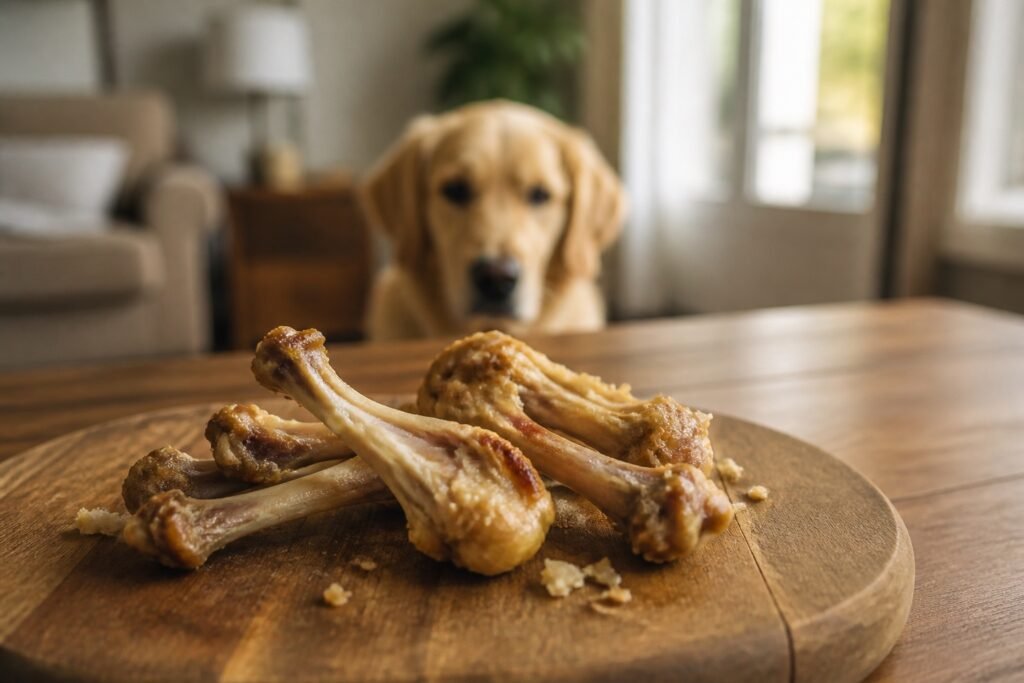
Cooked bones are not recommended: when cooked, they dry out and splinter, with the risk of perforation, obstruction and tooth fractures in dogs and cats.
The chicken, turkey or rib bone “from the food” looks like a natural prize, but cooking changes the structure: it becomes brittle. Splinters may stick in the mouth, esophagus, stomach, or intestine, or form plugs.
Signs range from vomiting, retching, painful constipation, and blood in stool to acute abdomen. Sometimes the problem shows up hours or days later. Raw bones also have risks (bacteria, fractures, obstruction) and are not automatically safe; this tab focuses on the classic danger of cooked bone.
For dental hygiene there are alternatives: brushing, dental diets/snacks with evidence and veterinary assessment. A table bone is not a brush.
Splinters and clogging.If you swallowed cooked bones - especially poultry - contact the veterinarian. Don't wait to see if it “comes out the other side” if there is pain, vomiting, or apathy.
What To Avoid
- Roasted chicken and turkey boneson plates and cubes.
- Rib “Prizes”or already cooked chops.
- Leave traysof food on the low table.
- Deceptive Bonesvery hard toy type that fracture teeth: you also have to choose wisely.
Editorial criteria for deciding
Before offering any human snack, answer three questions: does this species digest this format well?, is the amount a reward or is it displacing the entire diet?, is there disease, extreme age or medication that changes the risk? If any answer is doubtful, don't improvise.
- Observe 24–48 hafter the first minimal test: stool, vomiting, itching, apathy or refusal of food.
- 17. Count caloriesof the prizes within the daily total; the repeated “just a chunk” gets fatter.
- Guarda toxics(chocolate, xylitol, grapes, alliums, alcohol, raw dough) out of curious snouts.
- Before dangerous ingestion, contact veterinarian or toxicology with estimated weight and amount/hour.
Remember that Faunexia's food files are multi-species editorial guidance: the verdict of the table and the dose per species weigh more than anecdotes of networks. When the risk is asymmetrical (safe in one species and dangerous in another), do not generalize.
Frequently asked questions
Raw bones yes?
It's not a free yes. Some use them under strict protocols; there are also fractures and peritonitis. Talk to your vet before any bones.
Broth
Strained broth without onion/garlic/excessive salt is sometimes used, but cooked solid bone should not be chewed. Strain well.
My dog has been eating cooked bones for years and nothing ever happened.
Luck is not a protocol. The risk is probabilistic: one shrapnel is enough.
What do I do when I get to the emergency room?
Keep the animal calm, do not give homemade laxatives or induce vomiting. Write down which bone and how much.