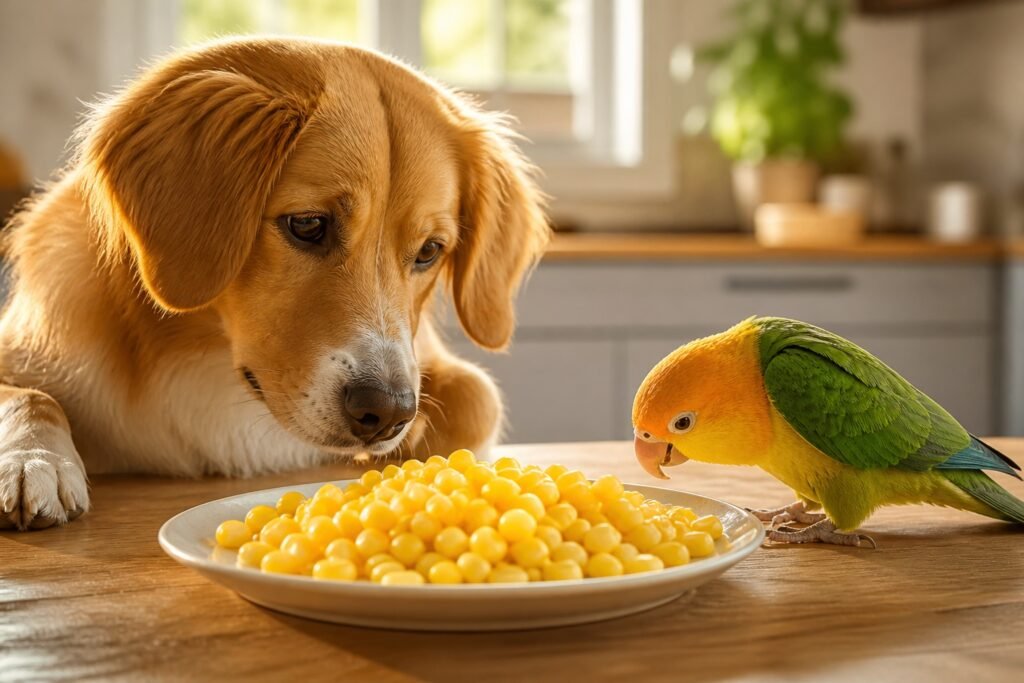
Loose cooked corn kernels can be offered in small quantities to many pets; The whole cob is a classic intestinal obstruction and should never be given.
Corn provides starch and some fiber. In dogs, cooked and shelled grains are digested better than raw; Even so, the nutritional contribution is secondary to a complete diet. The real problem is not the grain: it is the woody cob, which passes through the stomach and can get stuck in the small intestine.
If your dog steals an ear from the barbecue, the risk is not corn poisoning, but a foreign body. Signs of obstruction include repeated vomiting, abdominal pain, apathy, and no stool. In birds, corn is a common part of mixtures; In cats it contributes little because they are obligate carnivores.
Avoid ultra-processed corn with salt, butter, sauces or sweeteners. Corn canned in brine adds unnecessary sodium. Prioritize fresh or frozen grains steamed, without seasonings.
Cob = urgency.If the cob was ingested (whole or large pieces), contact your veterinarian. Don't wait for it to "go away on its own": surgery for a foreign body is common in this presentation.
How to offer it
- Unravelalways: only loose grains, never cob or hard pieces of the heart.
- Simple cooking:Steam or boil briefly, without salt, butter or sauces.
- Ration:a small handful as a reward or complement, not as the basis of the meal.
- Garbage and barbecue:keeps cobs out of reach; many dogs steal them from the bucket.
Editorial criteria to decide
Before offering any human snack, answer three questions: does this species digest this format well? Is the quantity a premium or is it displacing the entire diet? Is there illness, extreme age or medication that changes the risk? If any answer is doubtful, do not improvise.
- Observe 24–48 hoursafter the first minimal test: feces, vomiting, itching, apathy or refusal of food.
- Count caloriesof the prizes within the daily total; The repeated “just a piece” makes you fat.
- Guarda toxics(chocolate, xylitol, grapes, alliums, alcohol, raw dough) out of curious snouts.
- In case of dangerous ingestion, contact your veterinarian or toxicology with estimated weight and quantity/hour.
Frequently asked questions
Is corn in croquettes bad?
Not automatically. In well-formulated commercial foods, corn can be a source of digestible energy. The grain-free debate does not imply that corn is toxic; The dangerous thing at home is corn on the cob and excess human snacks.
And the popcorn
Homemade popcorn without butter, salt or sweeteners in very small quantities is usually tolerated, but it contributes little and the unpopped grain can irritate. They are not a recommended reward compared to more nutritious options.
My dog ate corn on the cob hours ago and is fine. Wait
The fact that he has not vomited yet does not rule out partial obstruction. Write down the time and estimated amount and consult; The veterinarian will decide if imaging or close observation is appropriate.
Can I give corn to a rabbit daily
No. The rabbit needs hay at will; Corn is rich in starch and, in excess, promotes dysbiosis. Reserve an occasional minimum, not daily ration.