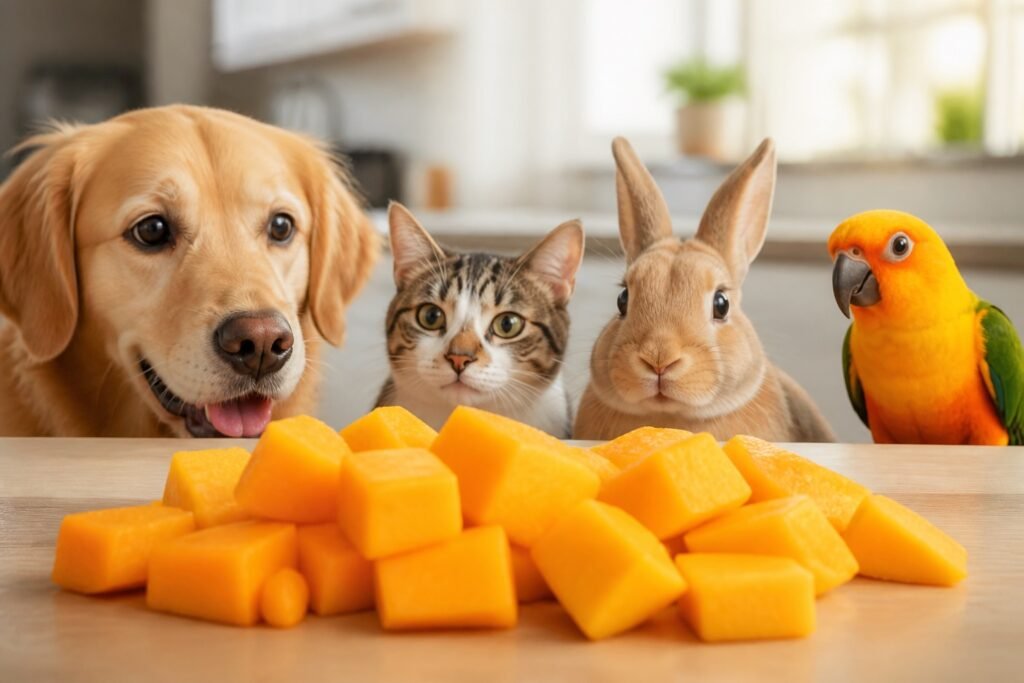
Ripe mango pulp, without pits or skin, can be an occasional snack for dogs, rabbits and many birds; cats hardly need it and the bone is a choking hazard.
Ripe mango is sweet and fibrous: it provides water, some vitamin A and natural sugars. In healthy dogs, a couple of cubes of pulp work as a summer reward, as long as it does not displace the main diet or trigger soft stools due to sugar.
The large, slippery bone is the real danger: it can fracture teeth, get stuck in the esophagus or intestine, or cause choking. The skin is difficult to digest and sometimes irritates. Never offer mango in syrup or sugary juices.
In rabbits and birds, fruit is a reward, not a base: hay (rabbits) and formulated pellets (birds) rule. Introduce slowly and rotate with other low-fat fruits.
Without bone or skin.Always remove the bone and skin. If you suspect ingestion of the bone, contact the veterinarian even if the animal seems calm at first.
How to offer it
- Preparation:Wash, peel, remove the bone and cut into small cubes.
- Maturity:soft and ripe pulp; avoid very acidic green pieces.
- Frequency:1–2 times a week maximum in healthy dogs.
- Preserves:Do not use mango in syrup or sugary products.
Editorial criteria to decide
Before offering any human snack, answer three questions: does this species digest this format well? Is the quantity a premium or is it displacing the entire diet? Is there illness, extreme age or medication that changes the risk? If any answer is doubtful, do not improvise.
- Observe 24–48 hoursafter the first minimal test: feces, vomiting, itching, apathy or refusal of food.
- Count caloriesof the prizes within the daily total; The repeated “just a piece” makes you fat.
- Guarda toxics(chocolate, xylitol, grapes, alliums, alcohol, raw dough) out of curious snouts.
- In case of dangerous ingestion, contacta con veterinario o toxiclogía con peso estimado y cantidad/hora.
Remember that Faunexia's food sheets are multi-species editorial guidance: the verdict of the table and the dosage per species outweigh network anecdotes. When the risk is asymmetric (safe in one species and dangerous in another), don't generalize.
Frequently asked questions
¿El mango provoca diarrhea?
In excess, yes: sugar and soluble fiber can soften stools. Start with a small piece and observe 24 hours.
Can I give dehydrated mango
Only if it does not contain added sugars and in even smaller quantities (it is concentrated). Many dehydrated snacks contain syrup; read them.
And the mango smoothie
Better not: it usually comes with milk, sweeteners or other fruits in high volume. Offers single and controlled pulp.
My dog ate the bone. What I do
Do not induce vomiting without indication. Note the time and call your veterinarian or a poison control/emergency center to assess the risk of obstruction.