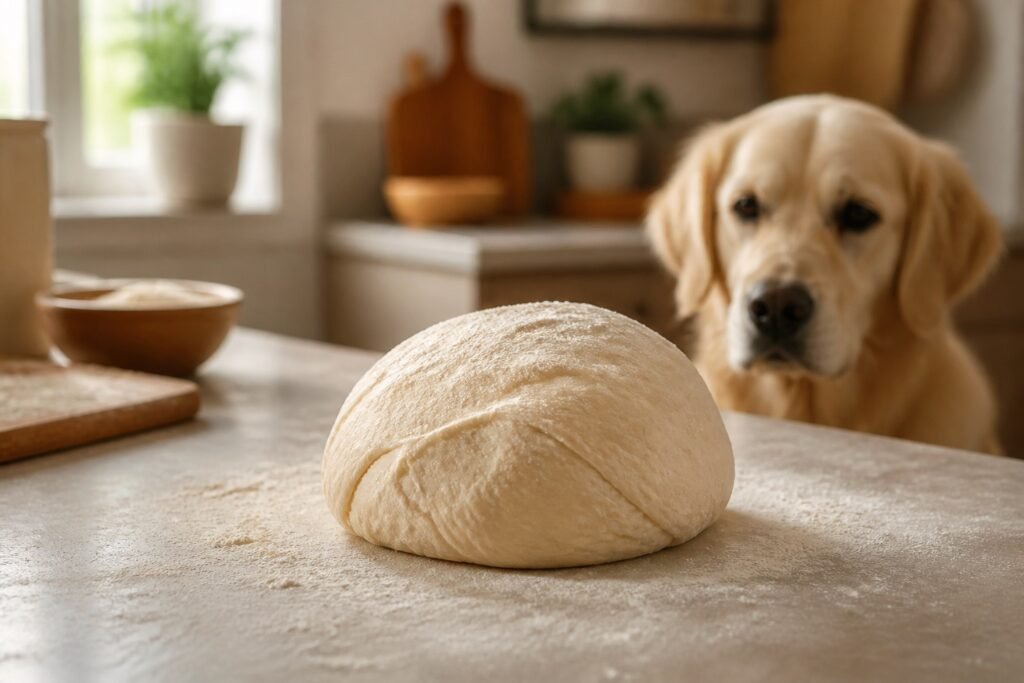
Yeast bread dough is dangerous: in the warm stomach it continues to ferment, produces alcohol and gas, and can cause severe bloating and alcohol poisoning.
When a dog (or cat) eats raw dough, the yeast finds an incubator: heat and moisture. Carbon dioxide swells the stomach; ethanol is absorbed and depresses the nervous system. You may see abdominal bloating, pain, failed vomiting, incoordination, weakness, and hypothermia.
It is not the same as a piece of bread already baked. Baked bread has another risk profile (calories, raisins, garlic); raw dough is a potential urgency for active fermentation. Sweet doughs can add chocolate or xylitol.
The more mass and the smaller the animal, the worse. Even moderate quantities in large breeds deserve a professional call: the risk of dilation/twisting in predisposed breeds complicates the picture.
Urgency.If you ingested yeast dough: contact your veterinarian or toxicology immediately. Do not induce vomiting without indication: the expanded mass can complicate handling. Do not leave mass lifting within reach.
What To Avoid
- Leave the dough bowlon the countertop or at the edge of the table.
- Binswith leftover dough or bags of yeast.
- Sweet masseswith chocolate, grapes or sweeteners.
- "Just a little bit" rawwhile you're cooking: it's not harmless.
Editorial criteria for deciding
Before offering any human snack, answer three questions: does this species digest this format well?, is the amount a reward or is it displacing the entire diet?, is there disease, extreme age or medication that changes the risk? If any answer is doubtful, don't improvise.
- Observe 24–48 hafter the first minimal test: stool, vomiting, itching, apathy or refusal of food.
- 17. Count caloriesof the prizes within the daily total; the repeated “just a chunk” gets fatter.
- Guarda toxics(chocolate, xylitol, grapes, alliums, alcohol, raw dough) out of curious snouts.
- Before dangerous ingestion, contact veterinarian or toxicology with estimated weight and amount/hour.
Remember that Faunexia's food files are multi-species editorial guidance: the verdict of the table and the dose per species weigh more than anecdotes of networks. When the risk is asymmetrical (safe in one species and dangerous in another), do not generalize.
Frequently asked questions
The unleavened pizza dough?
Without fermentation the risk of alcohol goes down, but it is still raw, heavy and often with garlic/spices. Better not. The leavened dough is the most critical.
Is already baked bread safe?
A simple piece without raisins or garlic is usually not very nutritious but does not ferment the same. Raw dough is the different and most dangerous scenario.
What data do I give to the veterinarian?
Weight of the animal, type of dough, estimated amount, time and whether it contained chocolate, grapes or sweeteners.
Can I give you ice or cold water?
Do not improvise remedies. Some protocols use gastric cold under supervision; do so only if instructed by the professional.