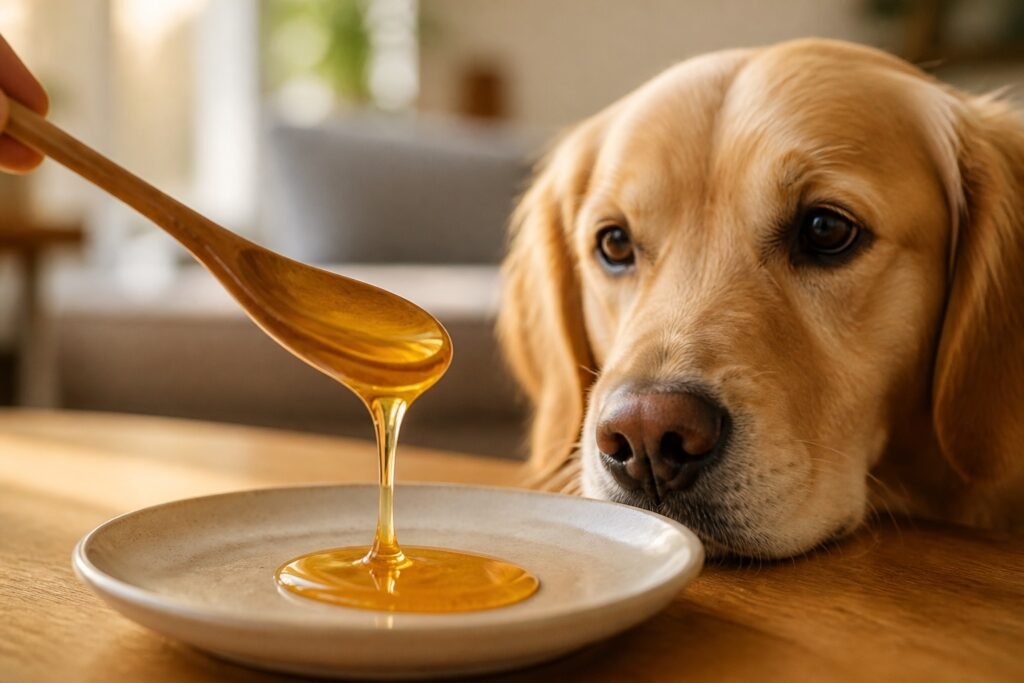
Honey is not a necessary supplement; in healthy adult dogs an occasional drop is rarely tragic, but sugar and risk in puppies/immunocompromised dogs discourage regular use.
It's concentrated sugar. It doesn't magically cure coughs or allergies. Unpasteurized honey is not recommended in very young puppies and immunocompromised animals due to the risk of spores (botulism), as it is in lactating humans.
Never mix honey with garlic, onions, or toxic home remedies. In diabetics, consult.
It's not home medicine.Coughs, wounds or poisonings are treated with veterinary criteria, not with tablespoons of honey.
What to do instead
- Waterand moist environment if there is mild irritation (and veto if it gets worse).
- Prizeslow in sugar.
- Do not spreadwounds with honey without professional indication.
- Guardthe pot out of greedy snouts.
Editorial criteria for deciding
Before offering any human snack, answer three questions: does this species digest this format well?, is the amount a reward or is it displacing the entire diet?, is there disease, extreme age or medication that changes the risk? If any answer is doubtful, don't improvise.
- Observe 24–48 hafter the first minimal test: stool, vomiting, itching, apathy or refusal of food.
- 17. Count caloriesof the prizes within the daily total; the repeated “just a chunk” gets fatter.
- Guarda toxics(chocolate, xylitol, grapes, alliums, alcohol, raw dough) out of curious snouts.
- Before dangerous ingestion, contact veterinarian or toxicology with estimated weight and amount/hour.
Remember that Faunexia's food files are multi-species editorial guidance: the verdict of the table and the dose per species weigh more than anecdotes of networks. When the risk is asymmetrical (safe in one species and dangerous in another), do not generalize.
Preparation, storage and warning signs
Safety doesn't end at the plate: how you store debris, whether you leave cobs or bones in accessible trash, or whether you mix leftovers with onion/garlic determines much of the actual urgency. A badly presented “acceptable” food (salt, sauces, sweeteners, fermentation) is no longer acceptable.
- Method:simple cooking where appropriate; no salt, butter, sofrito or sauces.
- Storage:trash lid and countertops; dogs steal barbecues and buckets.
- Signals:repeated vomiting, bloody diarrhea, apathy, tremors, difficulty breathing or absence of stool/urine according to species.
- Action:write down time and estimated amount; contact veterinarian/toxicology. Do not induce vomiting without indication.
- Prevention:educates cohabitants and visitors: do not feed from the table without criteria.
If your animal has a therapeutic diet (renal, hepatic, gastrointestinal, urinary), any new snack must pass through the discretion of your veterinarian: what is "safe" in a healthy adult may be inadequate in pathology.
Frequently asked questions
Honey for coughing?
Does not replace diagnosis; cough may be cardiac/infectious.
Leptospermum scoparium
Marketing; don't turn it into treatment.
In desserts?
Potential toxic sugar from dessert: no.
Bees/Propolis?
Do not improvise supplements.