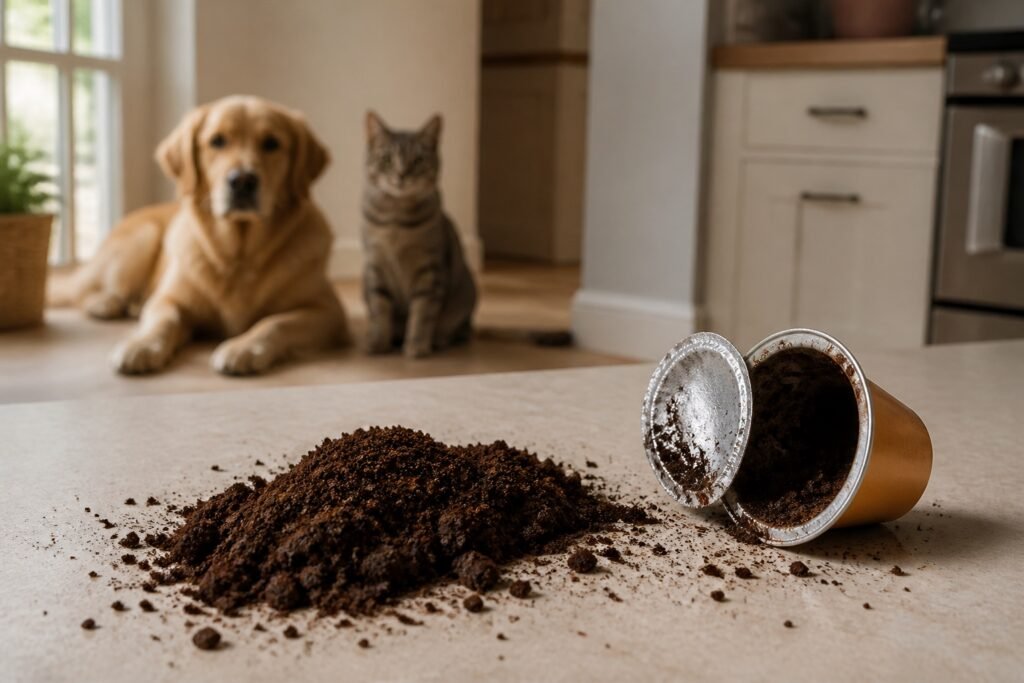
Yes: sludge, used capsules, beans and brewed coffee concentrate caffeine, toxic to dogs and cats; treat them as hazardous waste, not as fertilizer accessible to the snout.
Caffeine stimulates the heart and nervous system. After ingesting coffee, tea, energy drinks, grains or sludge, you may see hyperactivity, tachycardia, vomiting, tremors, hypertension and seizures. Wet sludge in the trash remains attractive and concentrated.
Single-dose capsules add plastic/aluminium and a compact coffee disc - double problem if bitten. Compost with coffee in the garden can also be licked by curious dogs.
There is no benefit in giving coffee “to cheer up” an animal. Theophylline and other related methylxanthines are also of concern in drugs: do not share human medication.
Caffeine = toxicity.Any relevant ingestion of sludge, grains or drink: contact veterinarian or toxicology with estimated weight and quantity. Don't wait for seizures.
What To Avoid
- Open bucketswith used filters and capsules.
- Mugleft on the low table.
- Grainand ground coffee on the countertop.
- Energy drinksand concentrated tea within reach.
Editorial criteria for deciding
Before offering any human snack, answer three questions: does this species digest this format well?, is the amount a reward or is it displacing the entire diet?, is there disease, extreme age or medication that changes the risk? If any answer is doubtful, don't improvise.
- Observe 24–48 hafter the first minimal test: stool, vomiting, itching, apathy or refusal of food.
- 17. Count caloriesof the prizes within the daily total; the repeated “just a chunk” gets fatter.
- Guarda toxics(chocolate, xylitol, grapes, alliums, alcohol, raw dough) out of curious snouts.
- Before dangerous ingestion, contact veterinarian or toxicology with estimated weight and amount/hour.
Remember that Faunexia's food files are multi-species editorial guidance: the verdict of the table and the dose per species weigh more than anecdotes of networks. When the risk is asymmetrical (safe in one species and dangerous in another), do not generalize.
Preparation, storage and warning signs
Safety doesn't end at the plate: how you store debris, whether you leave cobs or bones in accessible trash, or whether you mix leftovers with onion/garlic determines much of the actual urgency. A badly presented “acceptable” food (salt, sauces, sweeteners, fermentation) is no longer acceptable.
- Method:simple cooking where appropriate; no salt, butter, sofrito or sauces.
- Storage:trash lid and countertops; dogs steal barbecues and buckets.
- Signals:repeated vomiting, bloody diarrhea, apathy, tremors, difficulty breathing or absence of stool/urine according to species.
- Action:write down time and estimated amount; contact veterinarian/toxicology. Do not induce vomiting without indication.
- Prevention:educates cohabitants and visitors: do not feed from the table without criteria.
If your animal has a therapeutic diet (renal, hepatic, gastrointestinal, urinary), any new snack must pass through the discretion of your veterinarian: what is "safe" in a healthy adult may be inadequate in pathology.
Frequently asked questions
A lick to an empty cup?
It is usually low-risk, but a fund with espresso or lees is not. Evaluate volume and concentration.
Is decaffeinated coffee safe?
Don't treat it as safe - caffeine and other compounds may still remain. Don't offer it.
Fertilizer from potted sludge?
If your dog digs, avoid accessible compost. Use closed containers.
How long do the signs take?
Often within 1–2 hours, but acts on suspicion of ingestion.