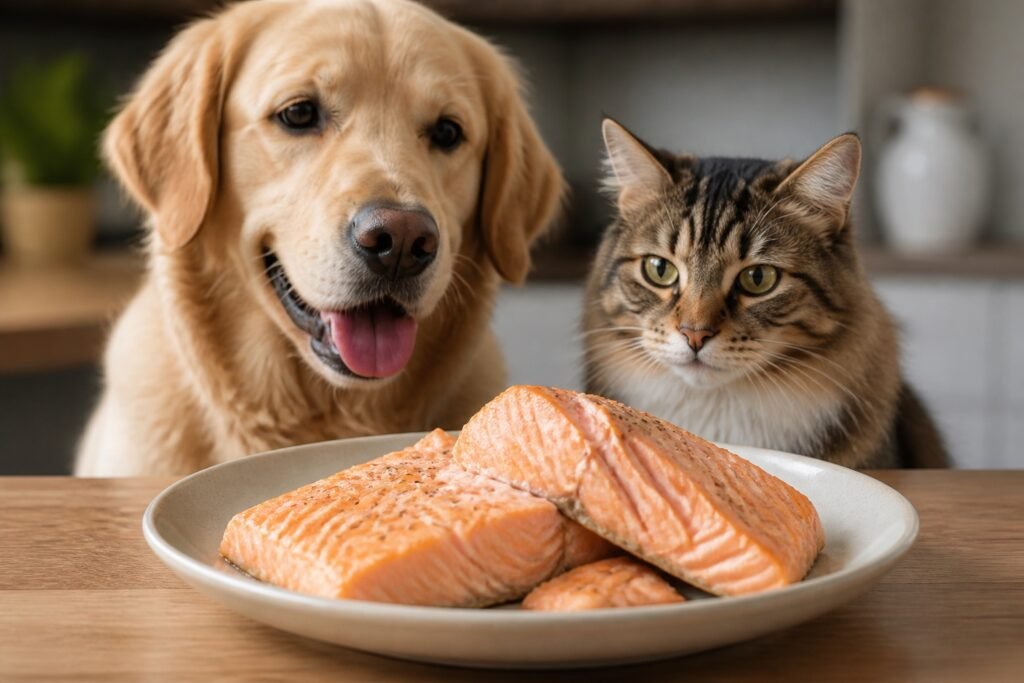
Cooked salmon without bones or seasoning can be an occasional treat rich in protein and omega-3 fats for dogs and cats; Raw salmon carries parasitic risks and nutritional imbalance if it becomes customary.
Well-cooked salmon provides high-quality protein and EPA/DHA fatty acids. As a treat or part of a homemade diet formulated by a veterinary nutritionist, it makes sense. As the only daily meal, it fails: it lacks calcium, vitamins and other nutrients depending on the species.
Raw river salmon (and some poorly treated products) have been associated with Neorickettsia helminthoeca infection ("salmon poisoning") in dogs in certain regions; Additionally, raw fish may contain parasites. Cooking eliminates much of that risk. Commercial smoking usually contains a lot of salt.
Always remove thorns. Avoid salted meats, teriyaki sauces, garlic butter and very oily skin in dogs with pancreatitis. In cats, an occasional cooked piece is fine; daily tuna/salmon creates selectivity and mercury/thiamine problems in raw.
Better cooked.Do not offer raw salmon on a regular basis. If vomiting, diarrhea, fever or apathy appear after eating fish, consult. The thorns are an emergency if there is choking.
How to offer it
- Cooking:oven, steam or boil until the meat falls apart; without garlic oil or sauces.
- Thorns:check with your fingers before serving.
- Ration:small piece as a reward, not the whole steak for dinner.
- Preserves:in natural water, drained; Avoid very salty oil ones.
Editorial criteria to decide
Before offering any human snack, answer three questions: does this species digest this format well? Is the quantity a premium or is it displacing the entire diet? Is there illness, extreme age or medication that changes the risk? If any answer is doubtful, do not improvise.
- Observe 24–48 hoursafter the first minimal test: feces, vomiting, itching, apathy or refusal of food.
- Count caloriesof the prizes within the daily total; The repeated “just a piece” makes you fat.
- Guarda toxics(chocolate, xylitol, grapes, alliums, alcohol, raw dough) out of curious snouts.
- In case of dangerous ingestion, contacta con veterinario o toxiclogía con peso estimado y cantidad/hora.
Frequently asked questions
Farmed or wild salmon
For an occasional prize, clean cooking matters more than origin. Avoid pieces in poor condition or heavily manipulated with marinades.
Is salmon oil the same
Veterinary omega-3 supplements have known dosages. Don't substitute professional judgment for free tablespoons of cooking oil.
Can you eat the skin
A little cooked skin without seasoning is sometimes tolerated, but it is fatty: omit it if there is a digestive or pancreatic history.
And what about sashimi or poke?
No. Raw food, sauces, onion, avocado and sesame complicate the risk. Save the poke to yourself.