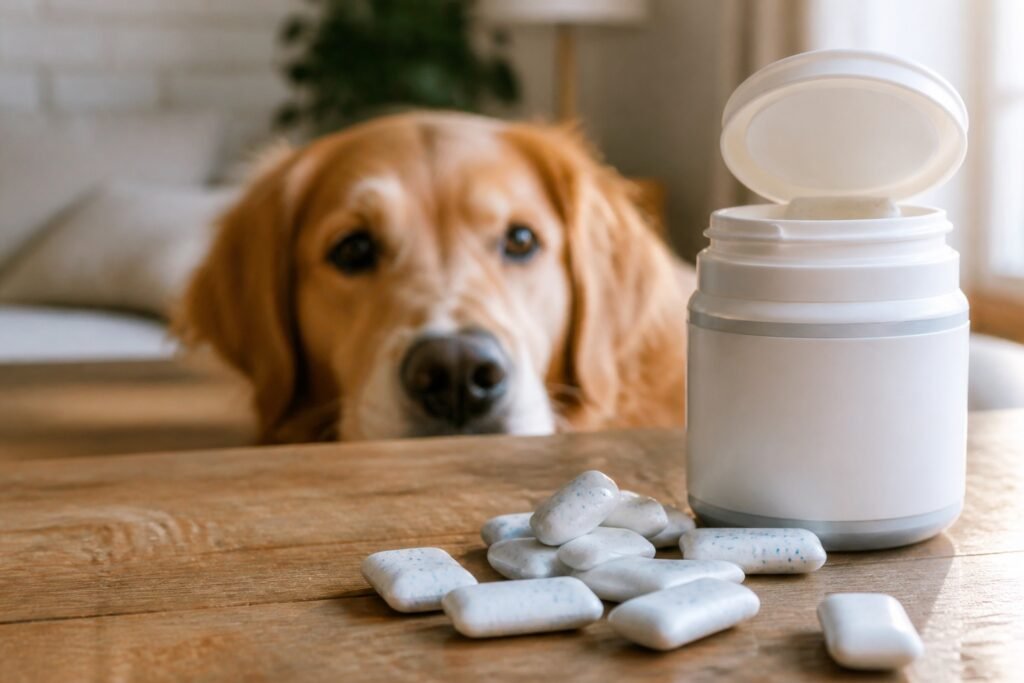
Xylitol (sweetener) can cause severe hypoglycemia and liver failure in dogs. It is in gum, candy, some peanut butters and "sugar-free" products.
In dogs, insulin triggers: blood sugar falls quickly. Vomiting, weakness, seizures, and liver damage may occur. The label may say xylitol, birch sugar, or E967.
Always read nut creams and diet snacks. When ingested, it is urgent: do not wait for it to "go away."
Urgency.If you suspect xylitol: immediate vet/toxicology with weight and product. Do not induce vomiting without indication.
where is hiding
- Gum and candyno sugar.
- Some peanut butterand snacks.
- Toothpastes/rinseshumans.
- Pastries and desserts"diet."
Editorial criteria to decide
Before offering any human snack, answer three questions: does this species digest this format well? Is the quantity a premium or is it displacing the entire diet? Is there illness, extreme age or medication that changes the risk? If any answer is doubtful, do not improvise.
- Observe 24–48 hoursafter the first minimal test: feces, vomiting, itching, apathy or refusal of food.
- Count caloriesof the prizes within the daily total; The repeated “just a piece” makes you fat.
- Guarda toxics(chocolate, xylitol, grapes, alliums, alcohol, raw dough) out of curious snouts.
- In case of dangerous ingestion, contact your veterinarian or toxicology with estimated weight and quantity/hour.
Remember that Faunexia's food sheets are multi-species editorial guidance: the verdict of the table and the dosage per species outweigh network anecdotes. When the risk is asymmetric (safe in one species and dangerous in another), don't generalize.
Preparation, storage and warning signs
Safety doesn't end at the plate: how you store leftovers, whether you leave cobs or bones in accessible trash, or whether you mix leftovers with onion/garlic determines much of the real urgencies. An "acceptable" food that is poorly presented (salt, sauces, sweeteners, fermentation) is no longer acceptable.
- Preparation:simple cooking where appropriate; without salt, butter, sofrito or sauces.
- Storage:garbage cover and countertops; dogs steal barbecues and buckets.
- Signs:repeated vomiting, bloody diarrhea, apathy, tremors, respiratory distress or absence of feces/urine depending on the species.
- Action:note estimated time and amount; Contact veterinarian/toxicology. Do not induce vomiting without indication.
- Prevention:Educate cohabitants and visitors: do not feed from the table without criteria.
If your animal is on a therapeutic diet (renal, hepatic, gastrointestinal, urinary), any new snack must go through the criteria of your veterinarian: what is "safe" in a healthy adult may be inappropriate in pathology.
Frequently asked questions
Erythritol or others
Don't assume equivalence; xylitol is the most critical in dogs.
A piece of gum
It may be enough for small dogs: check now.
Cat
Don't offer it; prioritize veterinary products.
How to read the label
Look for xylitol, E967, birch sugar.