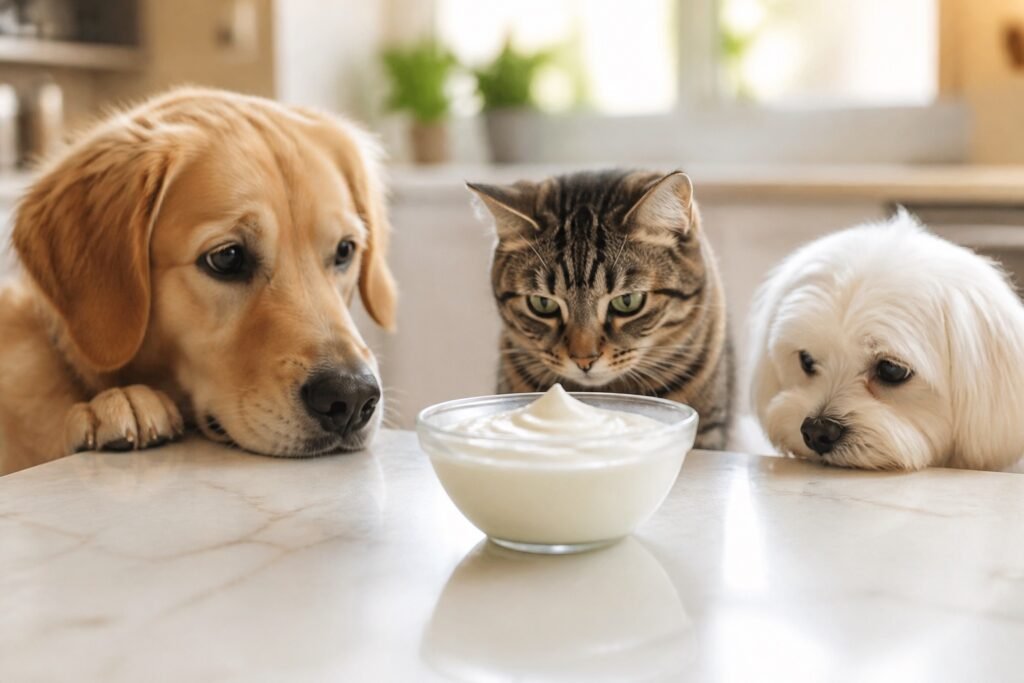
Natural yogurt without sugar or sweeteners can serve as an occasional treat for many dogs; In cats, lactose usually feels bad, and in herbivores or birds it does not make sense.
Yogurt provides dairy proteins and, if it is naturally fermented, some live bacteria. That does not make it a veterinary probiotic: the strains, doses and needs of each species are different. What is important at home is to read the label carefully.
Many adults—dogs and cats—produce less lactase with age. A splash of yogurt can cause gas, loose stools, or diarrhea. Even worse: light flavors, milkshakes or dairy desserts often contain xylitol or other sweeteners that are dangerous for dogs.
If you use yogurt as a vehicle for pills, choose natural without additives, in minimal quantity, and observe digestion for 24–48 hours. It does not replace a complete diet or a product prescribed by your veterinarian.
Read the label.Discard yogurts with xylitol, chocolate, raisins or "sugar-free" sweeteners. If in doubt about imported packaging, do not offer it.
How to offer it
- Guy:white natural yogurt, without added fruits, honey or cereals.
- Amount:a teaspoon in small dogs; up to a tablespoon in large quantities, at most occasionally.
- Temperature:fresh or at room temperature; Avoid turning it into regular high-fat ice cream.
- Alternative: si hay diarrhea o pancreatitis previa, pregunta al veterinario antes de cualquier lácteo.
Editorial criteria to decide
Before offering any human snack, answer three questions: does this species digest this format well? Is the quantity a premium or is it displacing the entire diet? Is there illness, extreme age or medication that changes the risk? If any answer is doubtful, do not improvise.
- Observe 24–48 hoursafter the first minimal test: feces, vomiting, itching, apathy or refusal of food.
- Count caloriesof the prizes within the daily total; The repeated “just a piece” makes you fat.
- Guarda toxics(chocolate, xylitol, grapes, alliums, alcohol, raw dough) out of curious snouts.
- In case of dangerous ingestion, contacta con veterinario o toxiclogía con peso estimado y cantidad/hora.
Frequently asked questions
Is Greek yogurt better
It usually has less lactose and more protein, but also more fat. In dogs with sensitive tummies or a history of pancreatitis, extra fat can be counterproductive.
Does it help the intestinal flora
It can provide bacteria, but it does not replace a veterinary product or correct an unbalanced diet. If there is chronic diarrhea, the diagnosis matters more than the yogurt.
And kefir
Same logic: no sweeteners, little quantity, observe. It is neither mandatory nor miraculous for healthy pets.
My cat asks for milk or yogurt. Do I deny it
Yes as a habit. Offer fresh water and appropriate treats for felines. Insistence does not imply nutritional need.