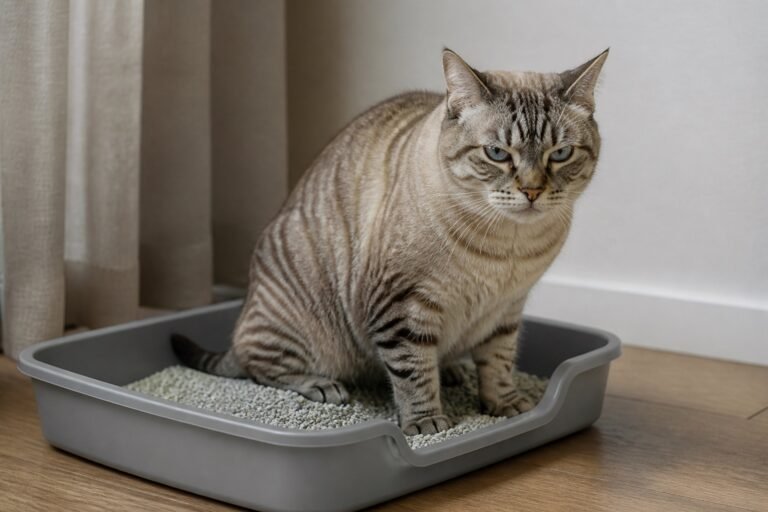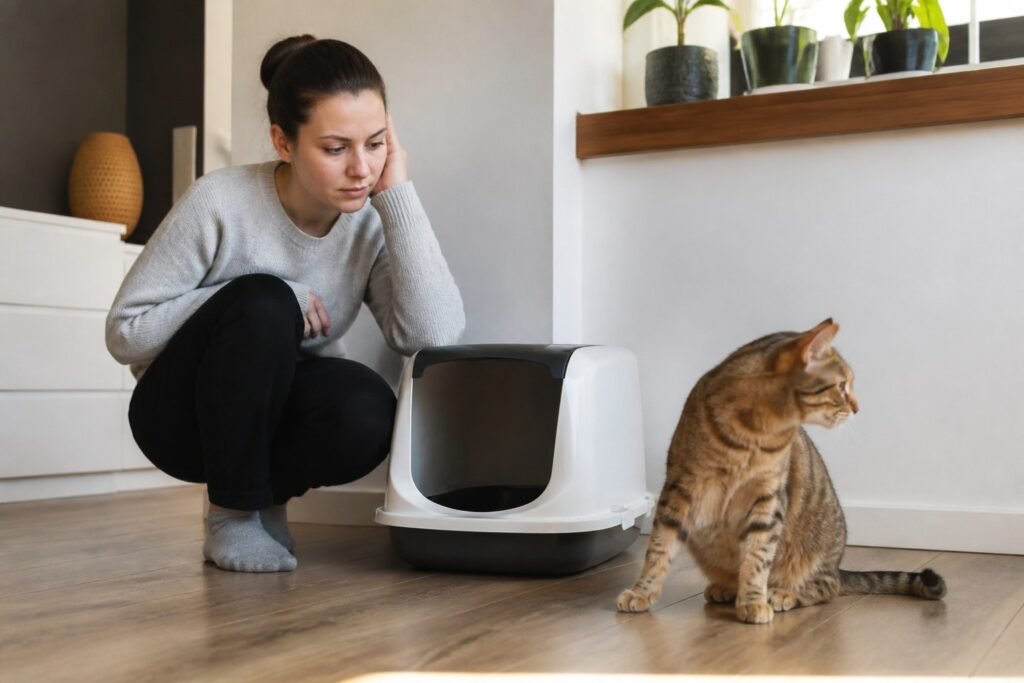
If your cat does not use the litter box, prioritize ruling out pain (cystitis, FLUTD, constipation, osteoarthritis) and only then check cleanliness, number of trays, location and type of litter. Punishing the puddle makes the problem worse and delays help.
Urinary urgency.Straining without urinating, meowing in the tray, restlessness, vomiting or lethargy: make an appointment now. In males there is a real risk of urethral obstruction. Related:cystitis · cat that doesn't eat · enrichment.
Stopping using the litter box is rarely “rage.” Pain, aversion to the tray and social stress are usually mixed: if urinating hurts or the litter box smells bad, the cat will look for another place. Correct order: health first, environmental management later. Note when it occurs, where it urinates or defecates, how many trays there are and if there are other cats.
Base reference:iCatCare — advice; feline care inAVMA — cats; urinary disorders inMerck — urinary disorders of cats.
Health first: why it hurts to go to the tray
Feline lower urinary tract disease (FLUTD), idiopathic cystitis, crystals, infections or constipation can make urination or defecation uncomfortable. Joint pain (hip, elbows) makes it difficult to climb onto high or covered trays. A cat that goes in and out without depositing, meowing, or licking its penis/vulva needs clinical evaluation, not just "more litter."
In males, urethral obstruction is an emergency: without urinating, toxins accumulate and the condition can become critical within hours. If you don't see urine, don't wait to "try another brand of litter."
Sandbox checklist
- Amount:indicative n 1 trays (n = number of cats), in different areas and without social tolls (passing next to another dominant cat).
- Cleaning:removes stool daily; wash completely periodically with neutral soap, without strong air fresheners.
- Sand:many prefer fine granulometry, without perfume. It changes type only gradually.
- Location:quiet, accessible, away from food, noise, washing machines and doors with constant passage.
- Tray type:covered or self-cleaning not everyone likes; test open, low and big enough to turn.
Stress, multi-cat and "marking"
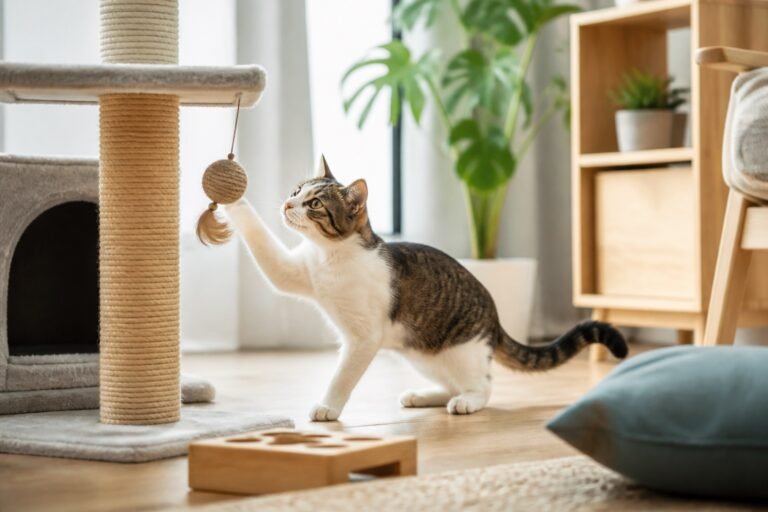
Stress (construction, moving, visits, conflict between cats) can trigger cystitis and urine outside the tray. In multi-cat, a single dirty tray or an area controlled by one individual generates avoidance. Distinguishes inappropriate elimination (surface) from vertical marking (jets): the handling is not identical, but punishing worsens the fear. Enrichment—high positions, play, distributed resources—reduces tension (guide).
Errors that make the problem worse
- Screams, sprays, rubbing the snout in the puddle or forcibly "showing" the sandbox.
- A single tray for several cats or leave it for days without emptying.
- Change litter brand, cover and location the same day.
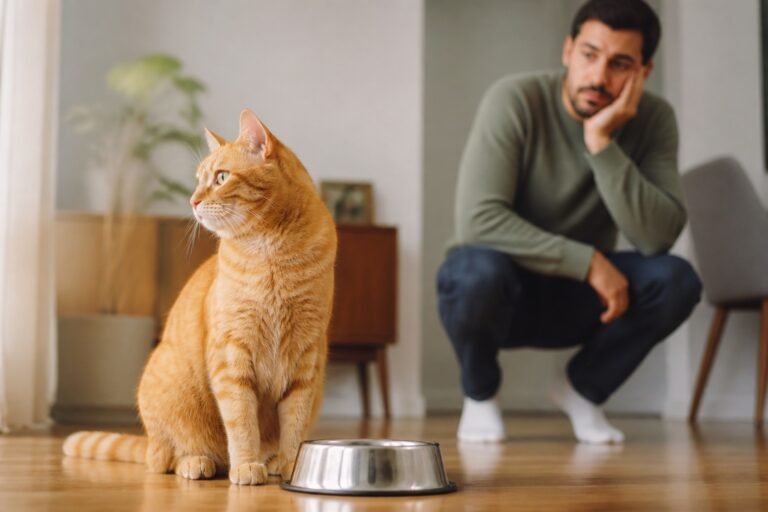
- Ignore associated anorexia or lethargy: if you do not eat, prioritize clinical (cat that doesn't eat).
Practical plan at home (after ruling out urgency)
Thoroughly clean the stained area with an enzymatic product (the residual odor invites you to repeat it). Offer a temporary extra tray near the problem site, and when using that, slowly move it toward the desired location. Keep the play and food routine predictable. If the vet indicates stress management or urinary diet, follow that plan; Don't improvise human drugs.
Based on reference sources.Faunexia editorial guidance on feline behavior and well-being. It does not replace veterinary diagnosis or treatment.
Frequently asked questions
My cat doesn't use the litter box because of "rabies"
It's rarely revenge. It is usually pain, aversion to the tray, social conflict or stress. Investigate causes; do not punish
How many trays do I need
A guideline rule is n 1 (one more than cats), in different and easy-to-access rooms. Adjust if there is reduced mobility or tension between individuals.
Should I go to the vet even if I "only" urinate on the carpet?
Yes if the change is new, there is straining, blood, less visible urine, vomiting or not eating. Many urinary problems first present as "dirt."
Can I medicate at home
Do not use human drugs or viral tips. Urinary or analgesic medication is indicated by the veterinarian after evaluating the animal.
Does this replace a veterinarian?
No. In the event of urinary doubt, anorexia or lethargy, clinical evaluation is a priority.
Sources
- International Cat Care — advice hub icatcare.org· consulted 2026-08-13
- AVMA — Cat care / pet owners avma.org· consulted 2026-08-13
- Merck Veterinary Manual — Kidney and urinary tract disorders of cats merckvetmanual.com· consulted 2026-08-13
- AAFP/ISFM — feline environmental needs (welfare context) catvets.com· consulted 2026-08-13