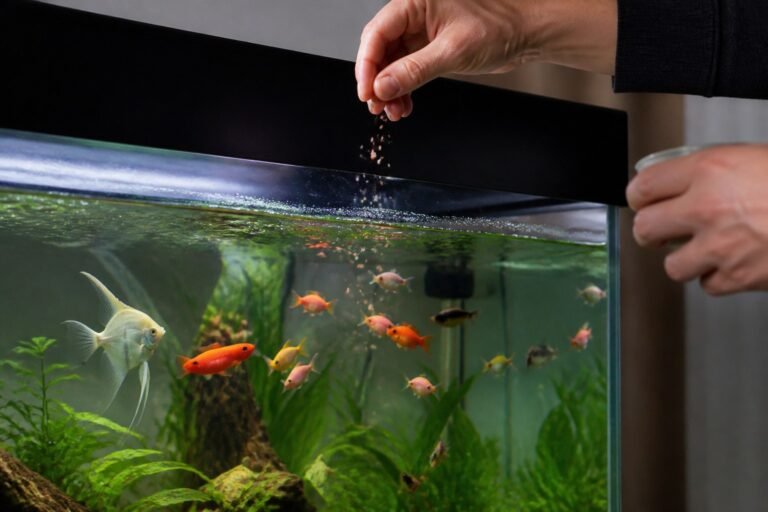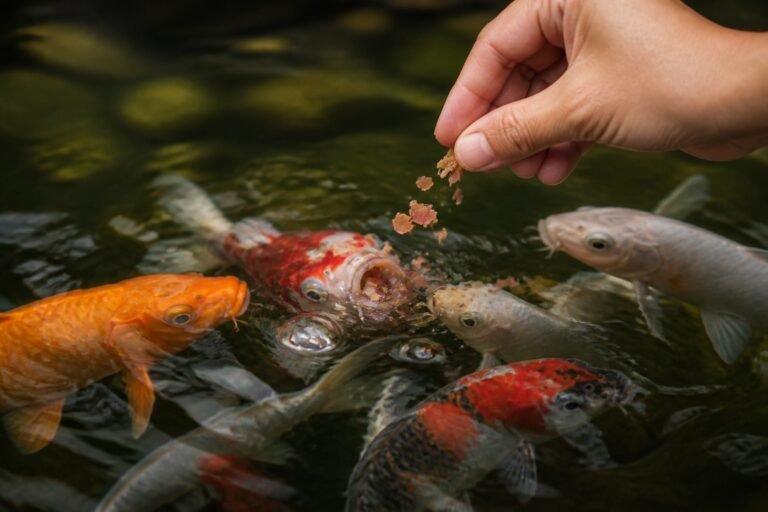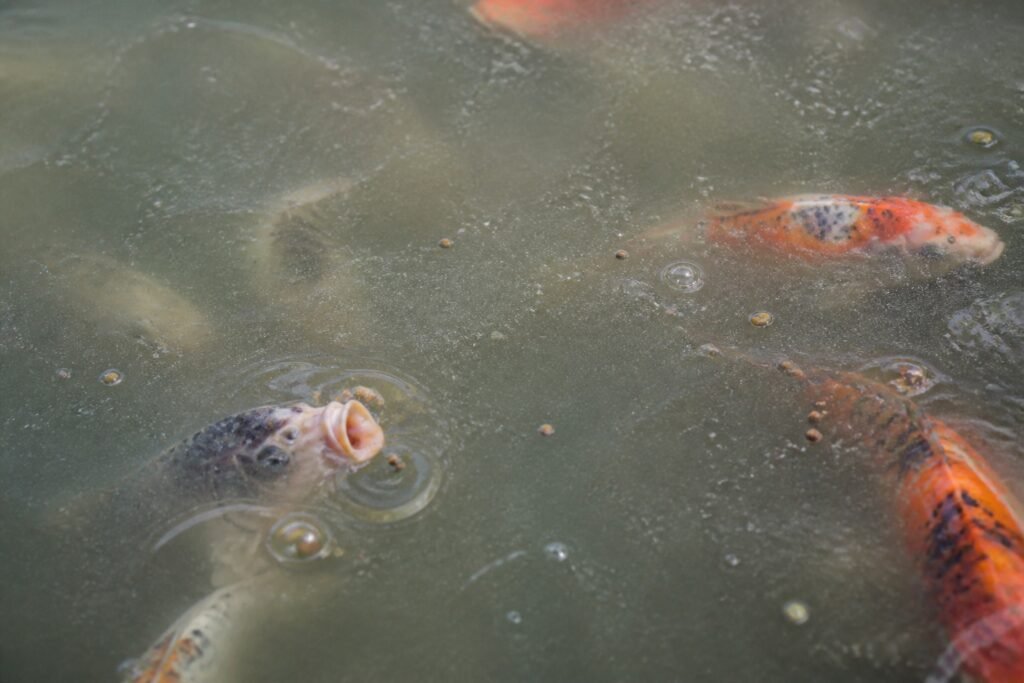
Overfeeding dirtyes the water, fattens the fish and releases ammonia. Rations that are eaten in ~2 minutes, 1–2 times/day (depending on species); A weekly fast day helps many adults.
Aquarium hobby (fish/water only)
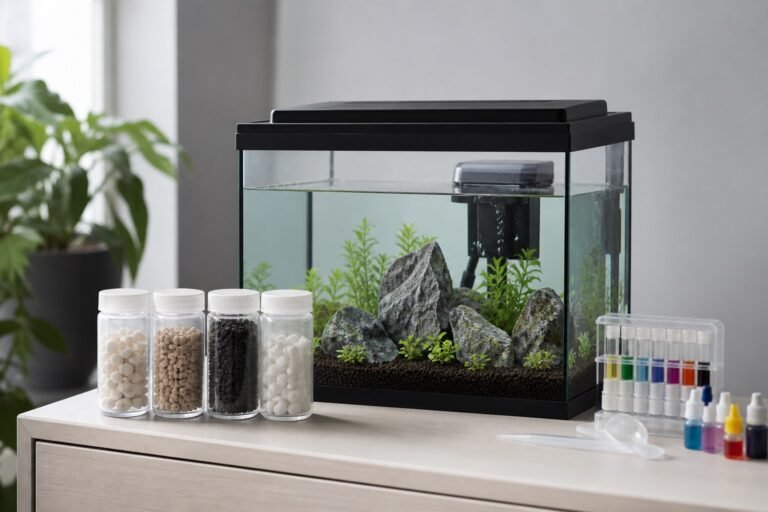
Topic: "overfeeding fish." Measure before medicating: ammonia, nitrite, nitrate, temperature and appearance of the fish.
- Biological load consistent with real liters and filtration.
- Regular partial water changes; Do not clean the filter with hot tap water.
- Related:nitrogen cycle.
Alarms
- Panting, stuck fins, die-off, high ammonia/nitrite.
Do not mix advice from walks, snacks or mammal heat.
Based on reference sources.Orientation by species, anchored to reference sources. It does not replace veterinary care.
Practical detail
- Introduce new foods one at a time and in a minimum trial quantity.
- When in doubt about toxicity, use thefood baseand contact clinic if there was relevant ingestion.
- Not home clinical doses; weight and species change the risk.
Signs in the aquarium
- Remains of food within a few minutes, cloudy water, shooting algae or fish that gasp at the surface after eating.
- Reduce portion, vacuum thoroughly if necessary and check filter; measure ammonia/nitrite if you can.
Rule of thumb
- Offers what is consumed in ~1–2 minutes, 1–2 times/day depending on species; punctual fasting only with informed criteria.
- Don't "compensate" with more food after a day of cleansing: the nitrogen cycle is unforgiving.
Frequently asked questions
Can I copy a tip from another species?
No. Maintain the criteria of the specific species of this guide.
Home medication
Do not use human drugs or viral tips.
Does this replace a veterinarian?
No.
Sources
- AVMA — Pet care www.avma.org· consulted 2026-08-07
- Merck Veterinary Manual www.merckvetmanual.com· consulted 2026-08-07