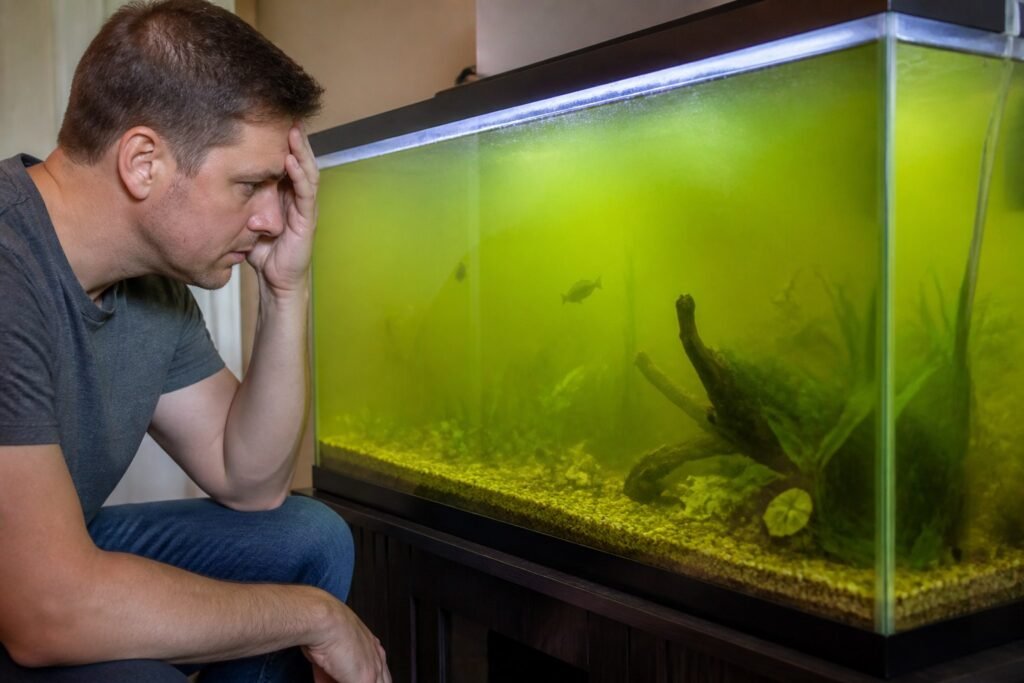
Green aquarium water is usually a bloom of single-celled algae from excess light and nutrients. It is controlled with tests, partial changes, fewer hours of light and checking overfeeding; not with blind "tricks" or total emptyings that destroy the balance.
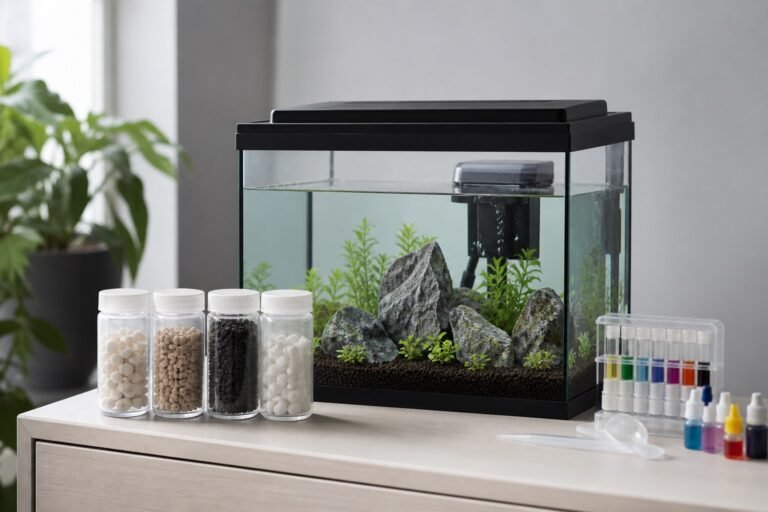
Water quality.Measures ammonia, nitrite and nitrate before adding clarifiers or chemicals. Related:cloudy water · cycling · nutrition.
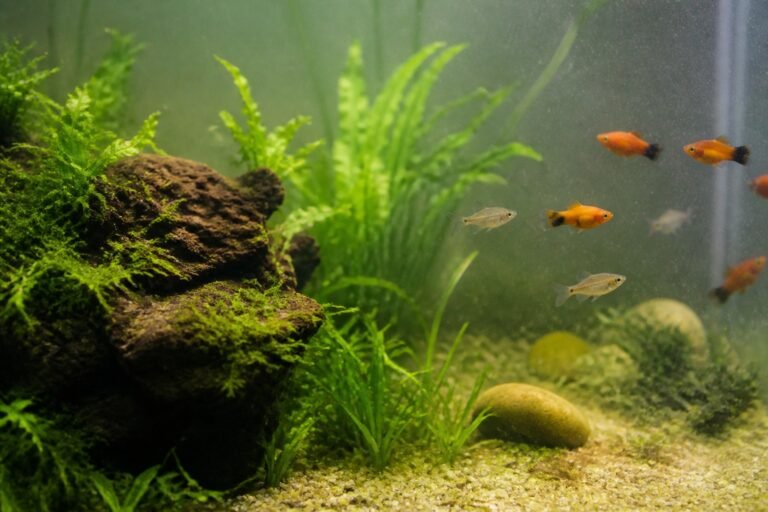
Seeing the tank turned into green broth is frustrating, but it is information: there is plenty of light energy and dissolved food for microalgae. Unlike glass with green algae attached (which also deserves attention), suspended green water is usually a dense bloom that reduces visibility and, in extreme cases, competes for oxygen when the light goes down.
The common mistake is to treat only the symptom—putting on a product, turning off the light for three days without a plan, or changing 100% of the water—and repeating the cycle in two weeks. Without correcting photoperiod, food and biological load, flowering returns.
The serene approach is to diagnose with a test, lower the light and nutrient pressure, and give the system time. Patience, here, is smart maintenance.
Base reference:Merck Veterinary Manual — aquarium fish; aquatic wellness framework inAVMA — aquatic animal welfare.
Why does it turn green
- Light:too many hours of screen time, direct sun on the window or a reflector that is too powerful for the volume.
- Nutrients:overfeeding, overpopulation, few partial changes, organic remains in the substrate.
- Instability:newly assembled aquarium, recently "thoroughly" cleaned filter or plants that do not yet consume nitrates.
Green water is not the same as milky water due to bacteria or incomplete cycling. That is why the test matters: high ammonia or nitrite requires another urgency than "just" an aesthetic flowering with high nitrates.
Step-by-step correction plan
- Test and write downammonia, nitrite, nitrate, temperature and current daylight hours.
- Reduces photoperiodtowards a more moderate range (often 6–8 hours depending on setup) and eliminates direct sun.
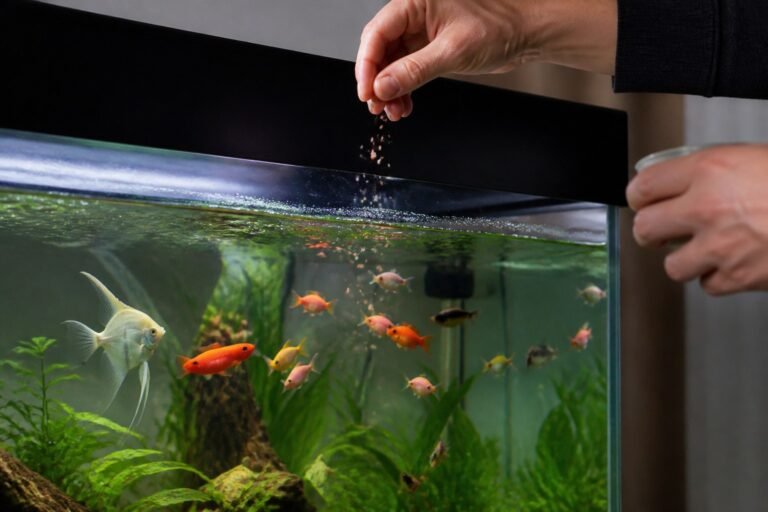
- Eat less:what is not eaten in ~1–2 minutes is messy; siphon remains.
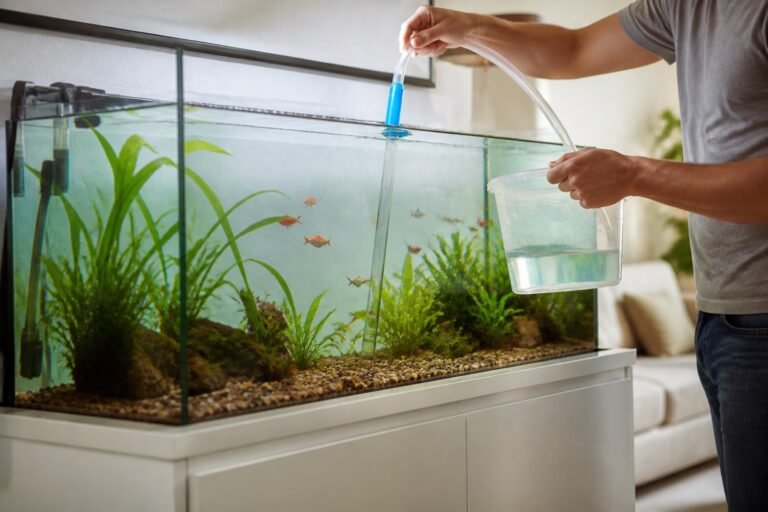
- Regular partial changeswith dechlorinated water at a similar temperature; Avoid 100% resets unless clearly indicated.
- Check population and maintenanceof the filter without sterilizing all the biological material at once.
A UV clarifier or other methods can help with stubborn blooms, but are not a substitute for light and food control. Read compatibility with plants and invertebrates and do not mix treatments without criteria.
What not to do
- Turn off the light indefinitely without monitoring oxygen and stress of fish and plants.
- Add antibiotics or “sink remedies” because the water looks bad.
- Introduce more fish “to eat algae” into an already unbalanced system.
- Rely only on snails or algivorous fish while continuing to overfeed.
Prevention once rinsed
Set a light schedule with a timer, feed measurable portions, maintain partial changes and do not place the tank in a window of midday sun. Fast-growing plants, when the aquarium is already stable, compete for nutrients; They are not a magic switch on day one.
When to really worry
If the fish are panting at the surface, there are deaths, detectable ammonia/nitrite or the green water coincides with a strong smell of putrefaction, prioritize water quality and professional advice. Aesthetics can wait; oxygen and nitrogenous toxins, no.
Based on reference sources.Faunexia editorial guidance. It does not replace veterinary diagnosis or professional aquarium advice.
Frequently asked questions
Why does the water in my fish tank turn green?
Almost always due to flowering of unicellular algae: excess light and nutrients. Correct both and control parameters with tests.
Can I leave the fish in green water
Better correct soon. Monitor behavior, oxygen and nitrogen values; Don't assume "it's just aesthetic."
Is it useful to change all the water at once
A total emptying usually destabilizes more. Prefers partial changes and attacking causes (light, food, load).
Does UV solve it forever?
It can lighten, but if light and nutrients remain high, flowering tends to return.
Does this replace the veterinarian or serious advisor
No. If you have sick fish or nitrogenous toxins, ask for professional help.
Sources
- Merck Veterinary Manual — Aquarium fish merckvetmanual.com· consulted 2026-08-13
- AVMA — Aquatic animal welfare avma.org· consulted 2026-08-13