If your dog pulls, is brachycephalic, or has a sensitive neck/trachea, prioritize a harness that distributes pressure across the chest. The flat collar is used as an identification tag and for dogs that already walk on a loose leash; It is not a tool to "correct" jerks.
Collar and harness are not absolute rivals: many dogs wear both (collar with tag and walking harness). What changes iswhereyou apply the force of the belt. A strong pull on the neck compresses the trachea, thyroid and cervix; In deep-chested breeds, seniors, or those with a history of cough/tracheal collapse, that matters more than the aesthetics of the accessory.
No harness "teaches" alone: if you reinforce the movement when pulling, the dog learns to pull with a harness as well. Combine equipment with loose leash education; seehouse training.
Avoid.Choke collars, spikes or electric shock are not educational shortcuts: they increase pain and fear. If there is coughing when pulling the collar, strange panting, bluish gums or syncope, consult the veterinarian before continuing to walk with cervical pressure.
Why the anchor point matters
The belt transmits force. In the neck that force is punctual; on the chest is distributed if the harness is well designed and adjusted:
- Flat collar:Useful for daily identification and dogs that no longer pull. Misuse: punish pulling or walking brachycephalics with constant tension.
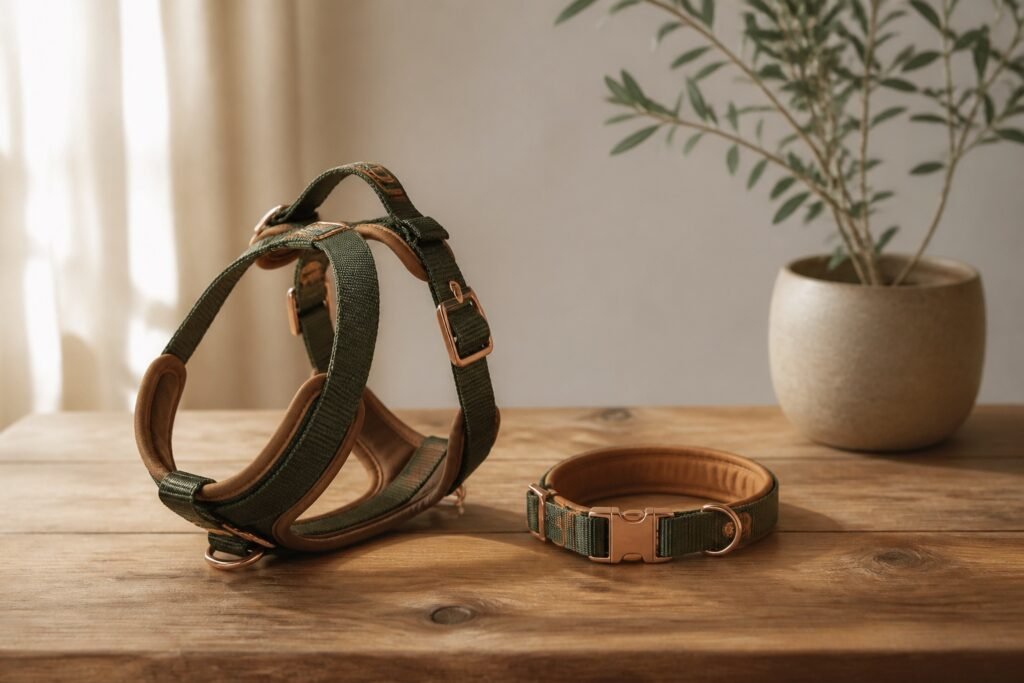
- Y or H harness:They tend to respect shoulder movement better than narrow bands on the scapulae.
- Front anchorage:helps redirect if you pull a lot; The rear gives more control in already trained dogs or in hiking.
- Martingale:in narrow necks (greyhounds, etc.) it can prevent escapes without closing like a choker; never as punishment.
Practical plan to choose and adjust
- Measures:neck (collar) and chest perimeter behind the armpits (harness). Write down measurements; Don't buy "by eye."
- Test the fit:two comfortable fingers should pass through. If it comes off when you lower your head or leaves red marks, change size or model.
- Harness first if: tira, es braquicéfalo, senior con tos, puppy en aprendizaje, o paseos largos/senderismo.
- Always flat collar:phone number (and up-to-date microchip). You can leave the collar at home/street and put the harness on only to go out.
- Material:padding that does not rub armpits; buckles that you open with one hand in an emergency; reflective if you walk at night.
- Train 5 minutes:At home, he rewards getting close to the harness, putting his head in and walking a few steps. Then go outside.
- Review weekly:seam wear, loose buckles and hair tangled under the ribbons.
Common mistakes
- Usar collar de castigo «porque tira» en lugar de enseñar leash floja.
- Harness so loose that the dog comes off when scared, or so tight that it rubs against the armpits.
- Buy for fashion (harnesses that limit the shoulder in sport jogging) without looking at the Y pattern.
- Rely on the accessory alone: without reinforcement from walking next to you, the pull continues.
- Forgetting ID: A harness without a tag/microchip doesn't help if you escape.
When to go to the vet
- Coughing, stridor, or wheezing when wearing a collar; fainting or pale/blue gums.
- Chafing, limping or refusal to walk after putting on a new harness.
- Sudden change in walking tolerance (cervical pain, nodules, neck mass).
Frequently asked questions
Does the harness cause dysplasia or poor posture
A poorly adjusted harness or one that limits the shoulder during sports jogging can cause discomfort. For normal urban riding, a well-sized Y model is usually safe. If there is lameness, check the fit and consult the vet.
Does the martingale collar work
In dogs with narrow necks it can prevent them from escaping without closing it like a choker. Only use it properly sized and never as a punishment tool.
Puppy from day one
Yes: brief and positive habituation to the harness at home before the first walk. Prioritize comfort and reinforcement; Training intensity increases with age.
Can I leave the harness on all day
Better not. Remove it at home to air out the skin and avoid tangles or friction. The light collar with a plate can stay on if it doesn't rub or squeeze.
Sources
- AAHA—Behavioral Health Guidelines aaha.org
- AVMA — Pet care / leash walking avma.org
- Merck Veterinary Manual — Respiratory / trachea merckvetmanual.com