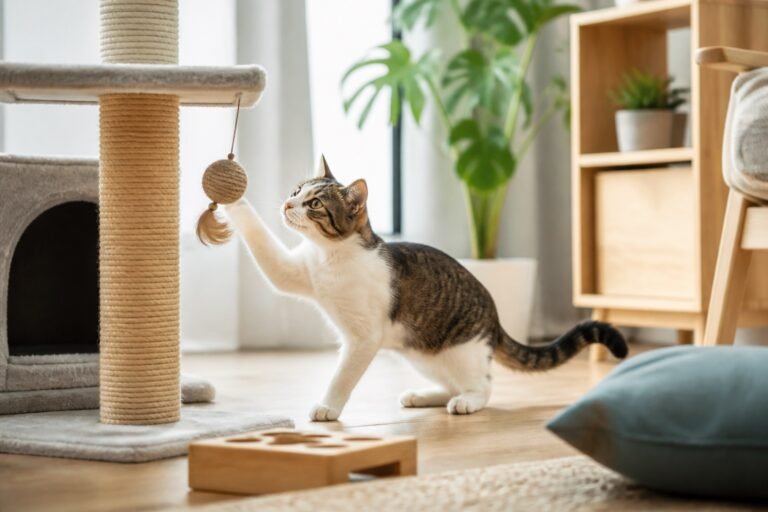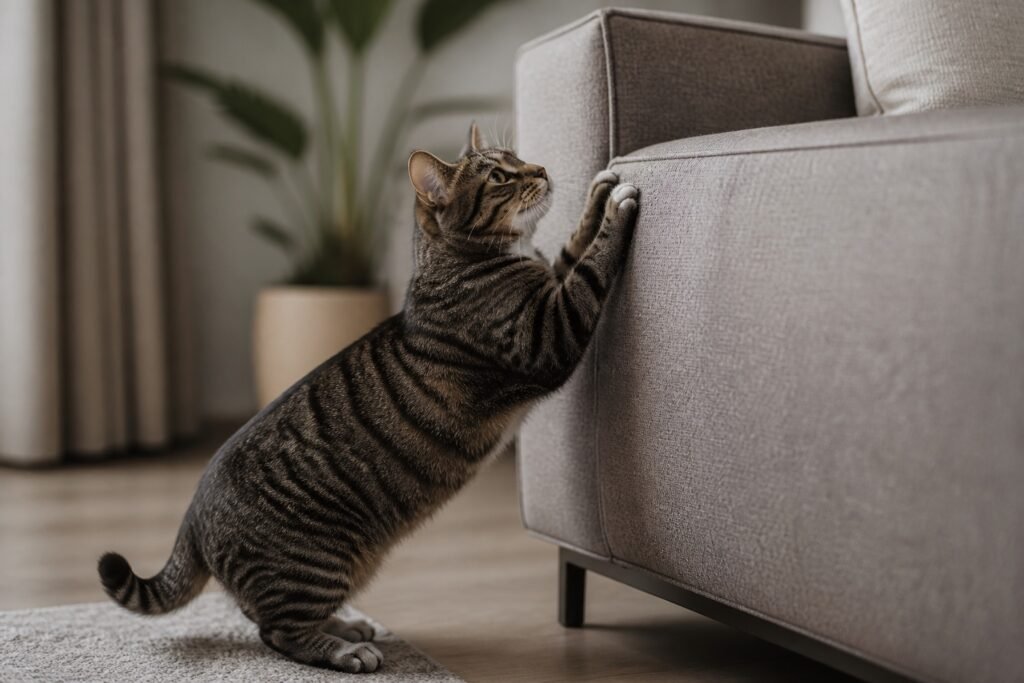
Scratching is normal cat behavior (marking territory, sharpening nails, stretching). If you destroy the sofa, the problem is almost never solved with punishment: you have to offer better surfaces, place them well and reinforce the use.
When a cat scratches chairs or sofas, it is not "getting revenge." It is solving species needs: maintaining nails, leaving olfactory and visual signals, and releasing tension. Punishment or spraying with water usually worsens the stress and moves the scratching to another area.
When to suspect something else.If the scratching appears suddenly along with changes in appetite, use of the litter box, meowing of pain or limping, ask for a veterinary evaluation: sometimes the cat discharges discomfort or pain on nearby surfaces.
Why spider (and what it is not)
Cats need to scratch. It is not a defect of education. What you can manage iswheredoes it:
- Nail maintenance:They eliminate sheaths and maintain grip.
- Marking:They leave paw gland odor and visible marks.
- Stretch and play:after sleeping or when entering hunting mode.
- Stress or boredom:moving, new animal, lack of verticality or daily play.
Practical plan in 7 days
- Inventory:Write down which furniture it scratches, at what time and in what position (vertical or horizontal).
- Real scratchers:at least one tall and stable (the jack must stretch as far as it will go) and another horizontal cardboard type. Material: sisal, corrugated cardboard or rough wood — not loose plush that falls apart.
- Location:put the scratching postin front offrom the target sofa or on the route you use when you wake up (hallway, by the window, entrance to the living room).
- Make the good attractive:catnip, catnip or a feather toy in the scratching post; reinforce with a reward when you use it.
- Make the sofa boring:Temporarily cover with textured cover that you don't like, double-sided cat tape, or clear protector. Don't use punishment.
- Nails:Light trimming every 2–3 weeks if the cat tolerates it (never the pink nerve). Seehow to cut nails.
- Daily game:2 sessions of 10–15 min hunting type (wand) before meals. Reduces scratching due to excess energy. Expand withenvironmental enrichment.
Common mistakes
- A single small scratching post in a dark corner.
- Move the scratching post every two days: the cat loses its reference.
- Shouting or spraying: associate your presence with threat.
- Relying only on covers without offering an alternative: the scratch will migrate.
If there are several cats, multiply resources (scratching posts, high points, sandboxes). Marking by social conflict is best explained interritorial marking.
Frequently asked questions
Nail protectors or declawing
Tip covers can be a temporary bridge if the cat tolerates them. Onychectomy (declawing) is neither an ethical nor a recommended solution: it is an amputation with consequences. Prioritize scratchers and handling.
How long does it take to change the habit?
There is usually improvement in 1–3 weeks if the scratching post is properly placed and you reinforce its use. Old habits can reappear with stress: maintain structure.
When to go to the ethologist or veterinarian
If there is aggression, urine marking, compulsive scratching despite an enriched environment, or signs of pain. A professional rules out medical causes and designs a behavioral plan.
Sources
- Cornell Feline Health Center—Behavior vet.cornell.edu
- iCatCare — Introducing cats icatcare.org
- AVMA — Pet care avma.org