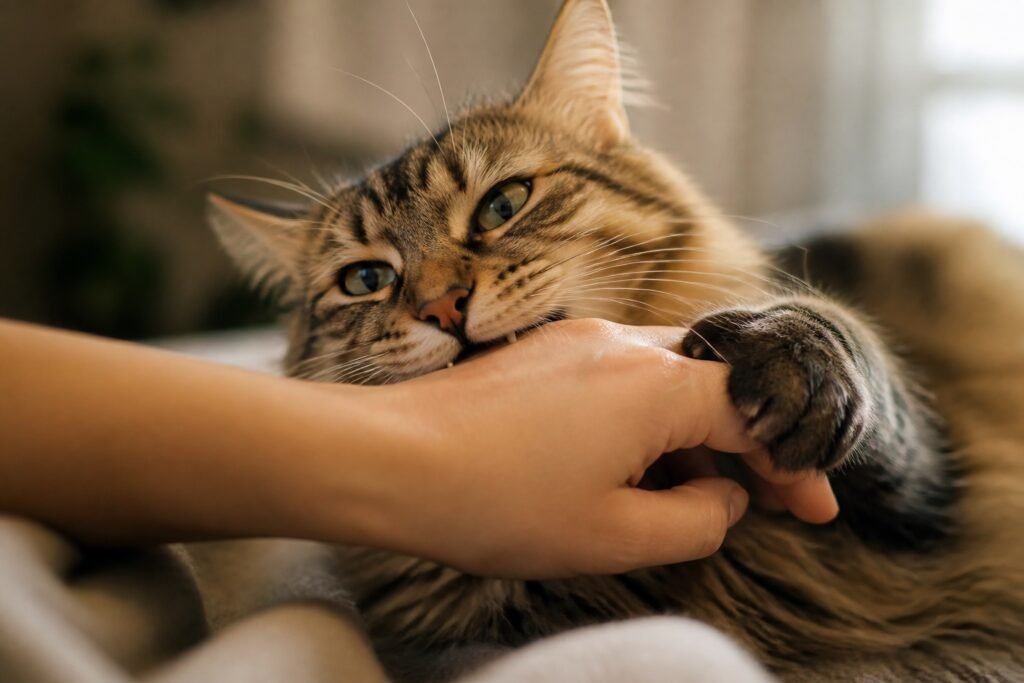
Feline biting is usually overstimulation, unrestrained play, fear or pain. Before the limit, do not punish with spray to the face, and check vet if it appears suddenly.
A cat's behavior is almost never a "whim": it is usually communication, species need, learning or discomfort. Punishing the symptom (screaming, spray, shock collar) usually worsens the fear and breaks the bond.
The useful plan combines: ruling out pain/illness, adjusting the environment, teaching alternatives, and reinforcing what you do want. If there is aggression, mutilation or risk to people, seek professional help (vet ethologist/educator).
Health first.A sudden change in behavior deserves veterinary examination before labeling it "behavior." Related:enrichment · socialize.
How to read the problem
- Context:When, with whom, after what trigger
- Function:Are you seeking attention, escape, recourse, anxiety relief
- Record:Did it start suddenly or did it grow for months?
- Body:lameness, appetite, litter/stool, sleep, itching.
Practical plan in 7 days
- Record:3–5 episodes with time and trigger.
- Veterinarianif there is pain, vomiting, lameness or sudden change.
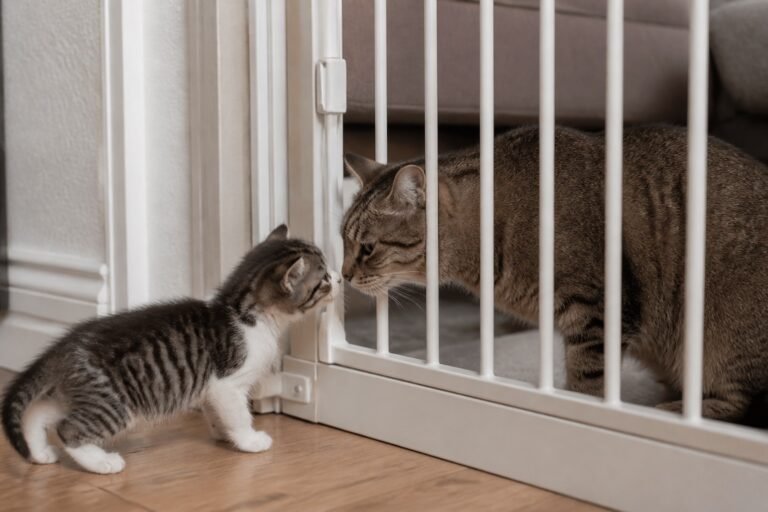
- Management:avoid rehearsing the failure (separate resources, shorten sessions, use barriers).
- Alternative:teaches incompatible behavior and rewards dryly.
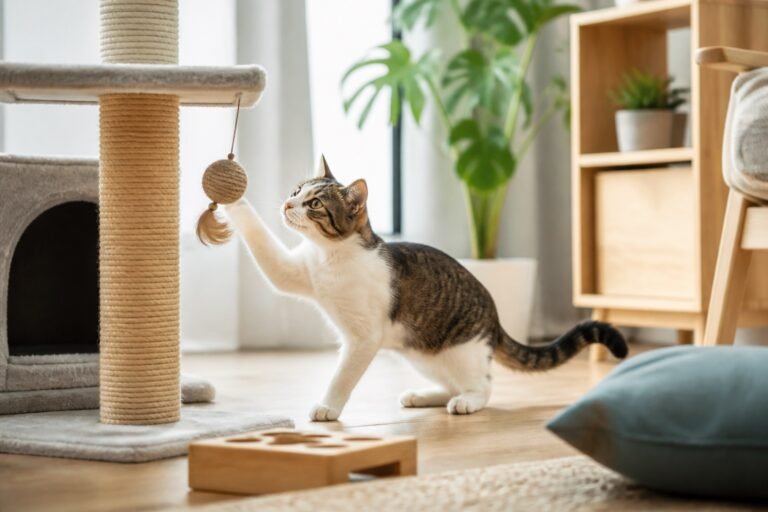
- Enrichment: juego/forrajeo diario dimensionado a la species.
- Consistency:Same rules between cohabitants.
- Revision:if there is no improvement in 1–2 weeks or there is risk, professional.
Errors that fuel the problem
- Delayed punishment (the animal does not connect cause and effect as you think).
- Unintentionally reinforcing the behavior (attention, chase, food after crying).
- Demanding “obedience” without covering mental/physical exercise.
Frequently asked questions
Does it go away alone
Sometimes it becomes chronic. Intervening early is cheaper than waiting.
Is a generic online trainer useful?
Better someone to see the case and use positive reinforcement; avoid fashionable aversive methods.
Medication
Solo con criterio veterinario/etológico; no es «drogas por comodidad», a veces es wellness.
Does this replace a veterinarian?
No.
Sources
- iCatCare — Behavior icatcare.org
- AVMA — Pet care / behavior avma.org
- Merck Veterinary Manual merckvetmanual.com