Apathetic cat that does not eat or seems hot: veterinary evaluation. Not human antipyretics.
What to do now.Anorexia lethargy = high priority in cats. Related:cat doesn't eat
Definition (guideline)
Reference:iCatCare; AVMA — cats
Feline fever is confirmed clinically; many systemic diseases cause it.
Triage by duration, frequency and condition
- Species:cat.
- An isolated episode in an active animal ≠ repeated signs, blood, pain or lethargy.
- Puppies/kittens, seniors and animals with chronic illness: lower threshold.
Warning signs — go
- Not eating, hiding, dyspnea, vomiting, acute lameness.
What not to do
- No paracetamol/ibuprofeno (toxics).
What to bring to the consultation
- Chronology, outside access, injuries, vaccines.
Based on reference sources.Editorial criteria anchored to reference sources (Merck, AVMA, ASPCA or others cited). It does not replace in-person veterinary care. No operative doses no source of the case.
What you can measure at home (and what you can't)
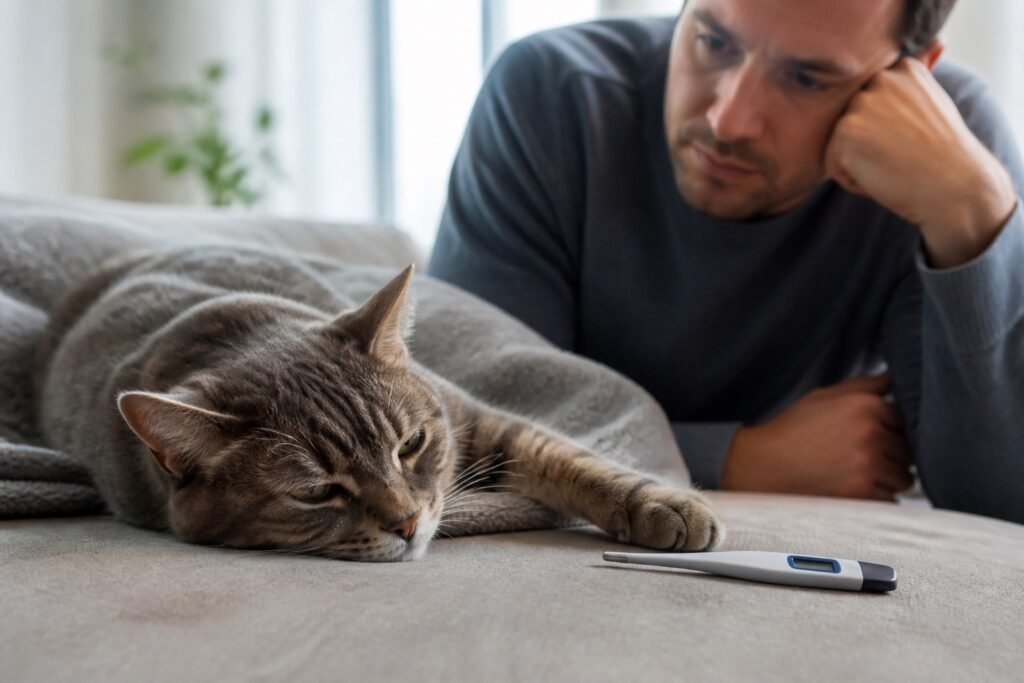
- Feline "fever" is confirmed clinically; the touch of ears or noseNoreplaces veterinary thermometry.
- Useful to record: appetite, water, hiding place, vomiting, breathing, lameness and whether there is access to poisons/plants.
Urgency threshold
- Anorexia, lethargy, dyspnea, pale/blue mucous membranes, or a cat that stops grooming: don't wait "and see tomorrow."
- Do not give human antipyretics. Management is decided by the veterinarian after an examination.
Frequently asked questions
Can I medicate at home
Do not use human drugs or viral tips without veterinary indication.
Do you wait "to see if it goes away?"
Not if there is alarm, suspected toxicity or high-risk animal.
Does this replace a veterinarian?
No.
Sources
- International Cat Care — advice hub icatcare.org· consulted 2026-08-07