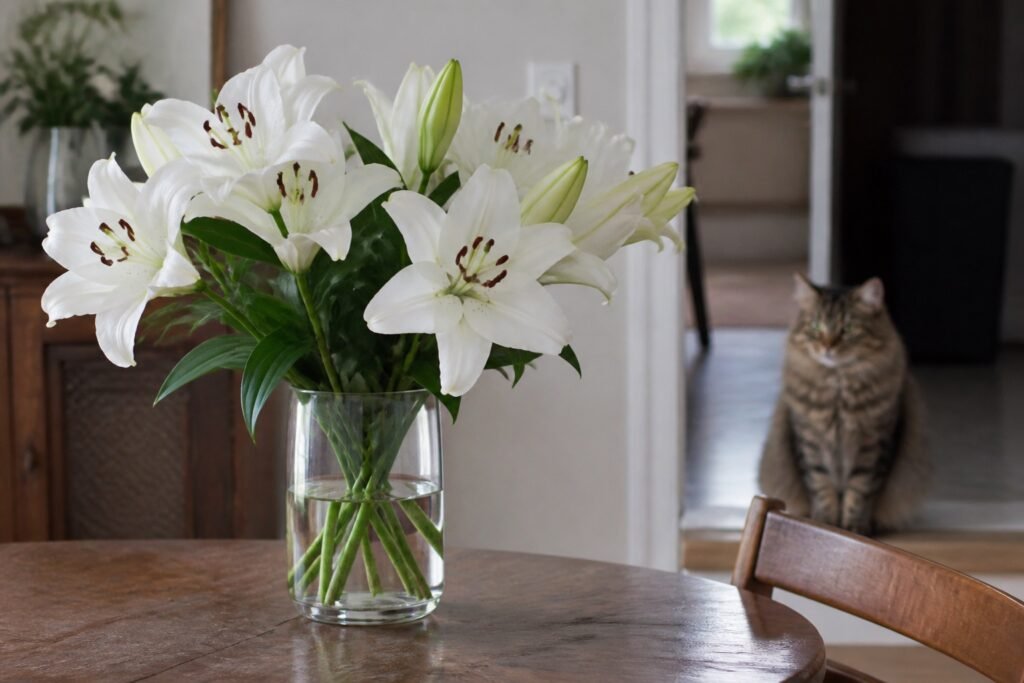
Any exposure to lilies (Lilium / Hemerocallis)—leaf, flower, pollen or vase water—is a veterinary emergency in cats. Don't wait to see vomiting: kidney damage can progress in hours(ASPCA — plants).
Immediate response.Remove access to the product, note time/amount/weight and contact your veterinarian or animal toxicology. Do not induce vomiting without indication. Don't wait. Related:vomit · food
Susceptible species
Reference:ASPCA — plants; AVMA — cats
Cats. Don't generalize thresholds between species.
Substance/exposure
Plants of the genus Lilium and daylilies (Hemerocallis). Pollen in hair and water from the vase also count.
Quantity and time
The severity depends on the weight, quantity, and time since exposure. If the quantity is unknown, treat it as potentially hazardous.We do not publish operational mg/kg doseswithout clinical criteria of the case.
Possible signs
- Vomiting, lethargy, anorexia, increased or decreased urine.
- Renal signs may evolve after exposure.
The absence of initial signs does not guarantee safety.
What not to do
- Don't wait until Monday or apply a "7-day plan."
- Do not use home remedies, oil, salt, alcohol or human drugs.
- Do not copy checklists from other species.
Based on reference sources.Editorial criteria anchored to reference sources (Merck, AVMA, ASPCA or others cited). It does not replace in-person veterinary care. No operative doses no source of the case.
Frequently asked questions
Can I wait to see symptoms
Not in case of suspicion of relevant intoxication.
Do I induce vomiting
Only if a professional indicates it.
Does this replace a veterinarian?
No.
Sources
- ASPCA — Toxic and non-toxic plants www.aspca.org· consulted 2026-08-07
- AVMA — Household hazards www.avma.org· consulted 2026-08-07