The "ideal" weight of a dog is not a magic number on the internet: it depends on the breed (or mix), the line, the age and above all thebody condition. Use ranges by size, touch ribs and waist, and confirm in clinic if you have doubts.
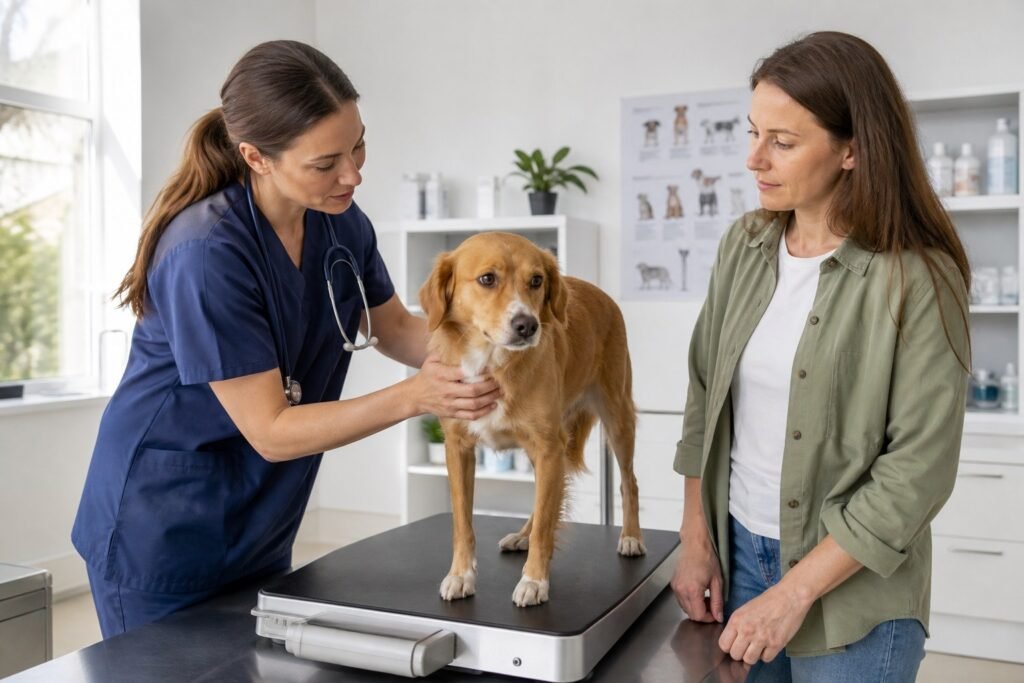
What to do now.Weigh on a scale (or clinic), write down grams and look at the silhouette from the side and from above. Related:obesity · how much to eat · breeds en Enciclopedia.
Reference:WSAVA — nutrition; AVMA — dogs
Why "according to their race" alone is not enough
Two adult Labradors can differ by several kilos depending on sex, line of work vs. company and condition. A mestizo does not have an "official table." That is why in clinic priority is given tobody condition score (BCS)compared to isolated weight: palpable ribs without excess fat, waist visible from above and abdomen gathered in profile.
- Puppy:weight changes week to week; The growth curve matters, not a fixed kg.
- Adult:look for the typological range of the breed BCS 4–5/9 (or equivalent 5/9 depending on the scale).
- Seniorsudden loss or gain can warn of illness; Don't just attribute it to "age."
Guidance ranges by size (adult)
They are typological bands to guide you, not a diagnosis. If your race is in theFaunexia Encyclopedia, cross the card size with these orders of magnitude and with what your veterinarian says.
| orientation group | Common examples | Approximate adult weight |
|---|---|---|
| mini/toy | Chihuahua, Yorkshire, Maltese | ~1–6kg |
| Little | Small Beagle, Cocker, French Bulldog | ~6–12kg |
| Medium | Border Collie, English Bulldog, Spaniel | ~12–25kg |
| Large | Labrador, German Shepherd, Golden | ~25–40kg |
| Giant | Saint Bernard, Mastiff, Great Dane | ~40–70kg |
Within each group there are overlaps: a robust Beagle can weigh like a light medium. The club standard (when it exists) talks about ranks, not a single number.
How to know if your weight is appropriate (at home)
- Feel the ribs:They should feel with gentle pressure, like the back of your hand; If you have to sink your fingers in, there is usually excess.
- Look from above:waist behind the ribs; Continuous "rectangular" silhouette usually indicates overweight.
- Look from the side:abdomen somewhat tucked up, not hanging or a "pregnancy belly" in non-pregnant women.
- Always weighs the same:same scale, same time of day, fasting relative to rewards. Write it down on a dated note.
- Snack count:The "bits" of table and walk treats account for more kilos than the base feed.
When to worry
- Rise or fall of
- Extreme hunger, weight loss, or excessive thirst, loss of mass.
- Dyspnea on exertion, lameness, refusal of food or lethargy.
- Puppy who is stagnating or losing weight: appointment soon.
Based on reference sources.Editorial guidance (WSAVA, AVMA). It does not replace veterinary evaluation or unsupervised weight loss plans, especially in puppies and sick people.
What to do if it is above or below
- Overweight:Don't fast or use "miracle diets." Ask for caloric adjustment and exercise plan in clinic; checkobesity in dogs.
- Low weight:rule out parasites, dental, malabsorption or chronic disease before "gaining weight from treats."
- Ration:calculate by weightaimand kcal of feed — guide inhow much should a dog eat.
Frequently asked questions
How much should a dog weigh according to its breed
Use the typological size/breed range as a reference and validate with body condition (ribs, waist). The exact number is best confirmed by your veterinarian with the individual's file.
Is the weight of the breeder's card mandatory?
It is a line reference, not a goal to force. A healthy dog can be at the low or high end of the range if his BCS is correct.
Can I trust the scale alone?
No. Two dogs of the same weight can have different fat and muscle. Combines silhouette palpation scale.
Does this replace a veterinarian?
No. It is editorial guidance from Faunexia.
Sources
- WSAVA — Global nutrition guidelines / BCS wsava.org· consulted 2026-08-12
- AVMA — Dog care avma.org· consulted 2026-08-12
- Merck Veterinary Manual — Dog owners merckvetmanual.com· consulted 2026-08-12