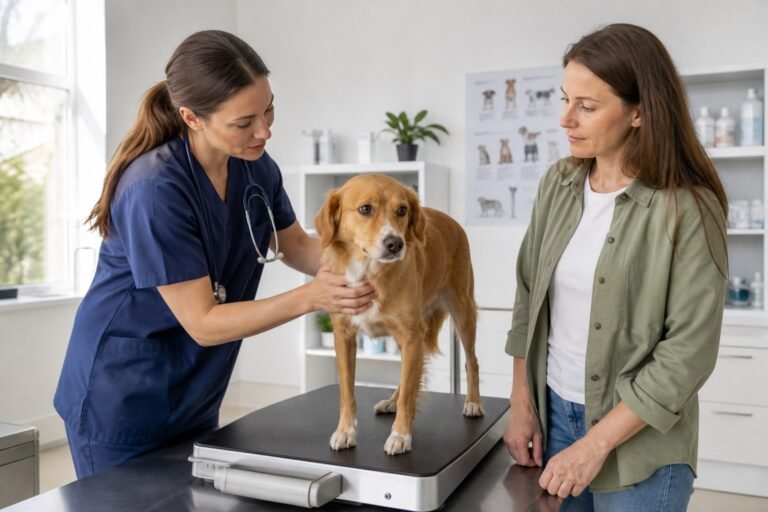
Being overweight increases joint, metabolic and quality of life risk. Adjust calories and exercise with veterinary criteria; no miracle diets or extreme fasts.
What to do now:Weigh, record prizes and ask the veterinarian for a plan (rule out illness). Related:how much to eat
Definition (indicative)
Reference:WSAVA — nutrition; AVMA — dogs
Excess body condition over ideal race/individual.
Triage by duration, frequency and status
- Strain:Dog
- An isolated episode in an active animal ≠ repeated signs, blood, pain or lethargy.
- Puppies/kittens, seniors and chronically ill animals: lower threshold.
Warning Signs — Go
- Exertional dyspnea, lameness, sudden anorexia — consultation.
Don'ts
- No aggressive unsupervised restraint on puppies/seniors.
What to bring to the consultation
- Weight, current diet, prizes, previous analytics.
Based on reference sources.Editorial criteria anchored to reference sources (Merck, AVMA, ASPCA or others cited). It is not a substitute for face-to-face veterinary care. No operative doses without source of the case.
Editorial plan (no miracles)
- Weighs in clinic or at home with repeatable method; records prizes and “table food” a week.
- Ask your veterinarian for a caloric adjustment: rule out illness before cutting portions blindly.
Habits that often fail
- Invisible prizes (visit, training, “a little piece” of each dish).
- Pee-only walks without trotting/sniffing section adapted to the condition.
Frequently asked questions
Can I medicate at home?
Do not use human drugs or viral tip without veterinary indication.
Do you wait "to see if it passes"?
Not if there is alarm, suspected toxicity or high-risk animal.
Does this replace a veterinarian?
No.
Sources
- WSAVA — Global nutrition toolkit wsava.org· consulted 2026-08-07