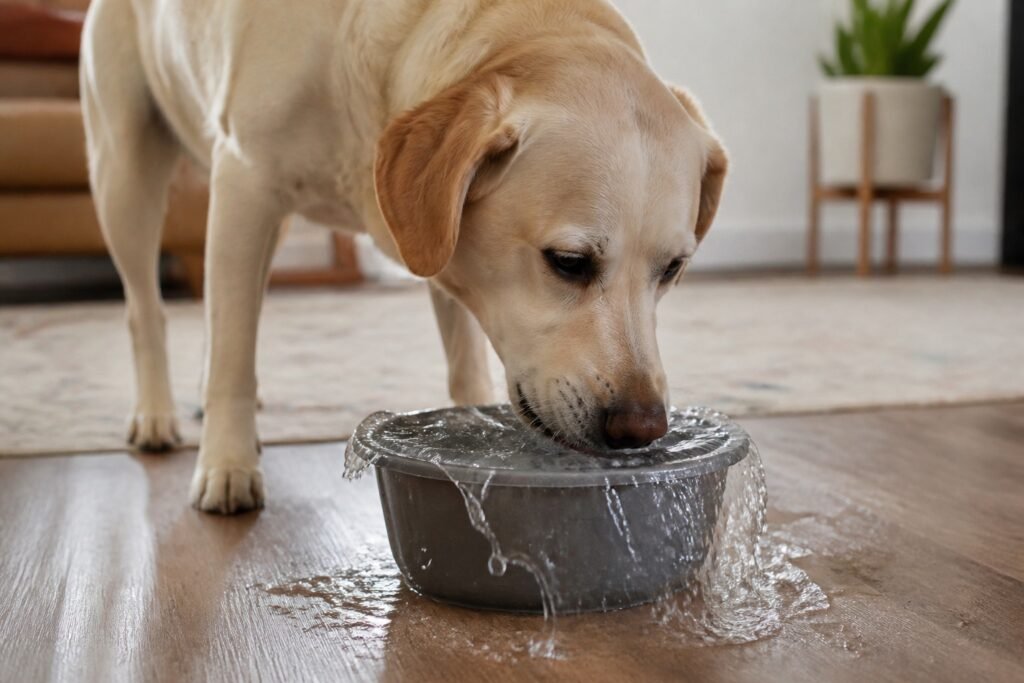
Heavy drinking (polydipsia) can be a sign of diabetes, kidney disease, Cushing's, or other causes. Don't ignore a clear change: consult a veterinarian with a history.
What to do now.Write down approximate volume, urine, appetite, weight and vomit. Related:dog health
Definition (guideline)
Reference:AVMA — dogs; AAHA—guidelines
Increased water intake compared to the animal's habit. Measure for 24 hours if you can.
Triage by duration, frequency and condition
- Species:dog.
- An isolated episode in an active animal ≠ repeated signs, blood, pain or lethargy.
- Puppies/kittens, seniors and animals with chronic illness: lower threshold.
Warning signs — go
- Intense thirst, very abundant urine, weight loss, lethargy, vomiting.
What not to do
- Don't restrict water blindly. Do not diagnose on the internet.
What to bring to the consultation
- Water/urine record, diet, medication.
Based on reference sources.Editorial criteria anchored to reference sources (Merck, AVMA, ASPCA or others cited). It does not replace in-person veterinary care. No operative doses no source of the case.
Frequently asked questions
Can I medicate at home
Do not use human drugs or viral tips without veterinary indication.
Do you wait "to see if it goes away?"
Not if there is alarm, suspected toxicity or high-risk animal.
Does this replace a veterinarian?
No.
Sources
- Merck — Polyuria and polydipsia in dogs www.merckvetmanual.com· consulted 2026-08-07