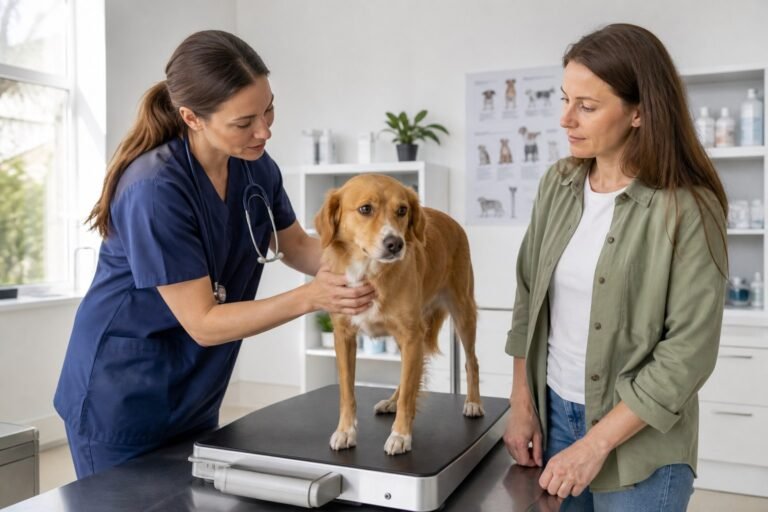
The reliable way to tell if a dog has a fever is torectal temperature(in clinic or with veterinary thermometer). Touching the nose or ears is not diagnostic. If there is apathy, tremors or refusal of food, contact the veterinarian; never give human paracetamol or ibuprofen.
What to do now.If there is collapse, dyspnea, intense vomiting, very pale mucous membranes or pain: emergencies. Related:tremors · heatstroke · doesn't want to eat.
Reference:AVMA — dogs; AAHA—guidelines
How to tell if your dog has a fever
- Rectal temperature:in dogs, a common resting range is around ~38.0–39.2 °C; Above this, hyperthermia/fever is usually considered to be evaluated in a clinical context. Only measure if you know how to do it safely; If not, describe signs and go to the clinic.
- Accompanying signs:apathy, tremors, excessive heat to the touch, refusal of food, panting at rest, glassy eyes.
- Context:Intense exercise, closed car, heat stroke, recent vaccination, injury, vomiting/diarrhea
- Don't diagnose through the nose:A hot or cold truffle does not replace thermometry.
Fever versus environmental heat
After running or in the heat, the temperature can rise without infection. Prioritize shade, water and ventilation. HeheatstrokeIt's an emergency: don't wait "for it to pass."
What not to do
- Never ibuprofen, paracetamol or other human NSAIDs/antipyretics (toxic in dogs).
- No impromptu ice baths or alcohol pads.
- Do not "wait and see" if there is collapse, dyspnea or a high-risk animal (puppy, senior, chronic).
What to bring to the consultation
- Chronology (when it started), temperature if someone trained measured it, vaccines, travel, possible toxins.
- Appetite, vomiting, diarrhea, cough, lameness, gum color.
Based on reference sources.Editorial criteria (AVMA/AAHA). It does not replace veterinary care. No homemade doses.
Frequently asked questions
How do I know if my dog has a fever without a thermometer?
You can only suspect it due to behavior (apathy, tremors, loss of appetite). Confirmation is clinical/thermometry. When in doubt, consult.
Can I medicate at home
Do not use human drugs or viral tips without veterinary indication.
Is fever always an infection?
No. Inflammation, excessive heat, stress or other causes also raise temperature. The vet interprets the ensemble.
Does this replace a veterinarian?
No.
Sources
- AVMA — Pet care / dogs www.avma.org· consulted 2026-08-12
- AAHA—Guidelines www.aaha.org· consulted 2026-08-12
- Merck Veterinary Manual — Dog owners www.merckvetmanual.com· consulted 2026-08-12