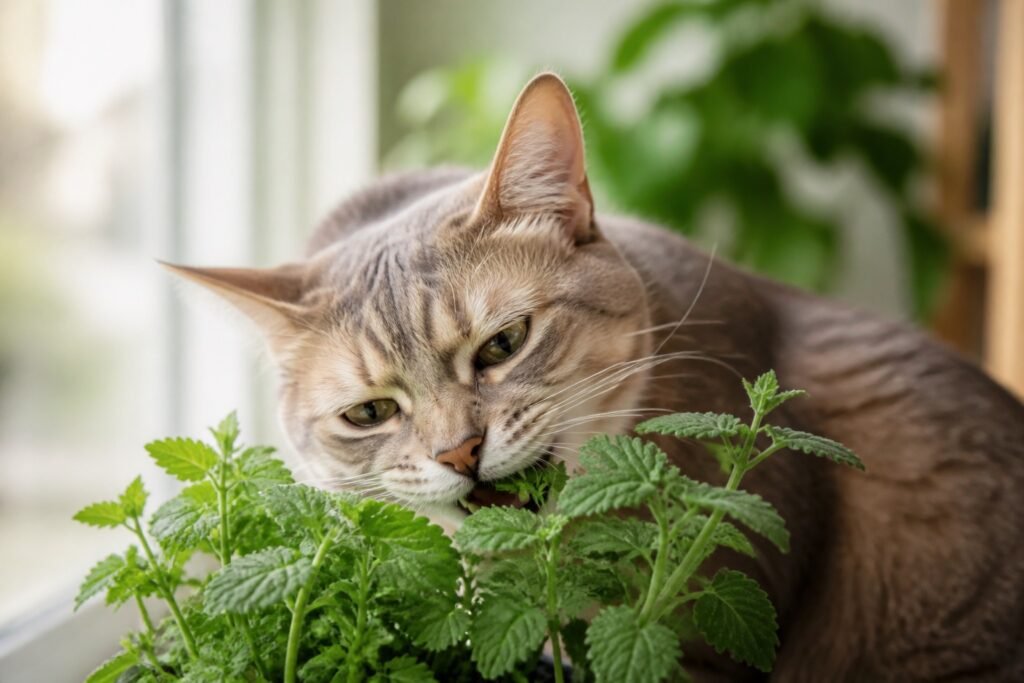
Many cats chew grass for taste, fiber, or mild discomfort. Does not test for deworming. Avoid toxic salon plants; if vomiting often or diarrhea, veto.
What does this Guide not cover?
Practical care for acaton the topic “cat eats grass.” Each section provides a decision, a risk or a measurable action.
Useful routine (only this species)
- Observe appetite, energy, stool/urine (or water parameters in fish) and a key sign of the topic.
- Maintain a cat's own habitat and equipment hygiene.
- Change one variable at a time when adjusting the routine.
Risks and when to consult
- Pain, anorexia, dyspnea, bleeding, collapse, or rapid worsening.
- In rabbits and birds, anorexia is relative urgency.
- If the problem exceeds safe, veterinary home management (exotics/aquarium when applicable).
Don'ts
- Do not use canine protocols (e.g. permethrin) or bird/fish checklists.
- Do not use human drugs or viral tip.
- Don't apply a generic “7-day plan” to an emergency.
Based on reference sources.Orientation by species, anchored to reference sources. It is not a substitute for veterinary care.
Practical details
- Observe sign frequency and general condition of the cat.
- A single change of environment/diet at a time; documents 48–72 h.
- → Veterinary alarms (anorexia, dyspnea, bleeding, collapse).
Frequently asked questions
Can I copy a tip from another species?
No. Do not use canine protocols (e.g. permethrin) or bird/fish checklists.
Home medication?
Do not use human drugs or viral tip.
Does this replace a veterinarian?
No.
Sources
- International Cat Care icatcare.org· consulted 2026-08-07
- Merck Veterinary Manual — Cat owners www.merckvetmanual.com· consulted 2026-08-07